The Violet-Eyed Icon: 15 Fascinating Facts About Elizabeth Taylor
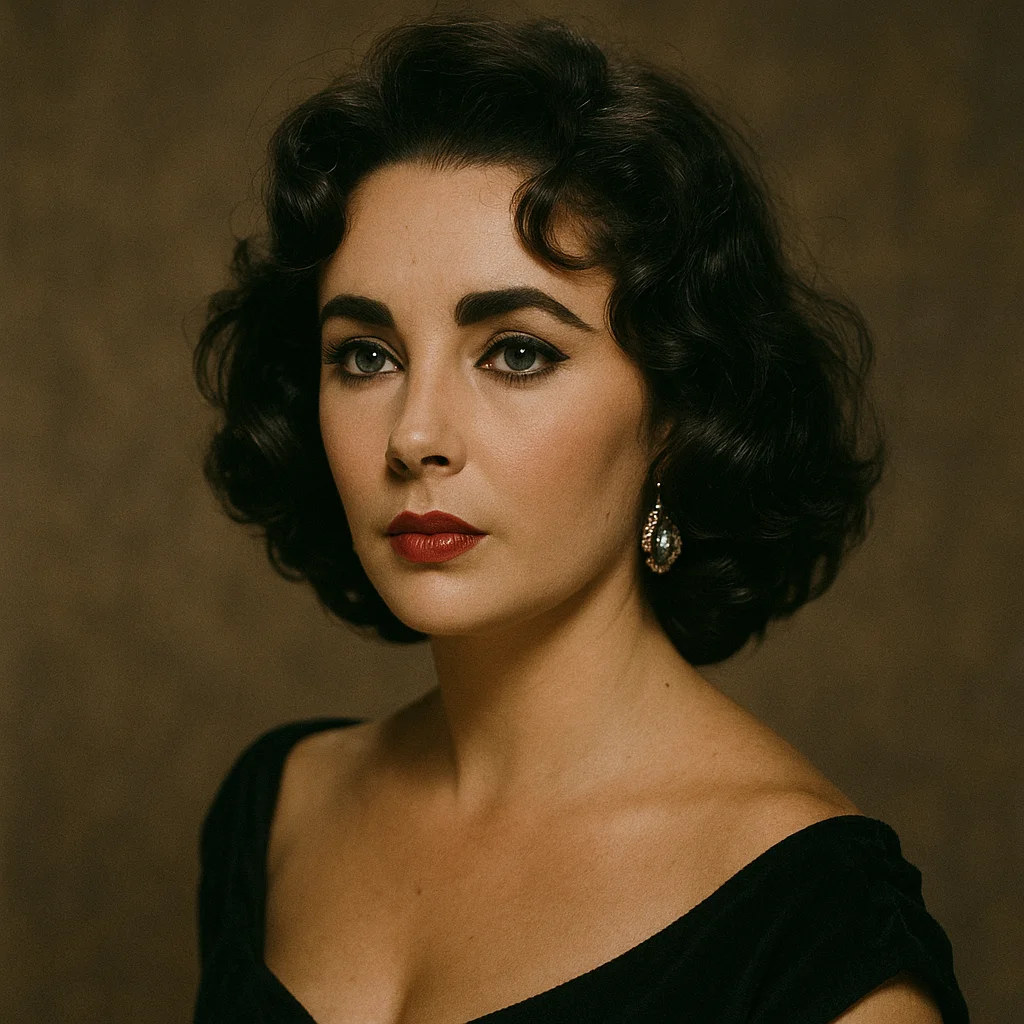
Elizabeth Taylor remains one of the most mesmerizing figures in cinematic history, celebrated as much for her extraordinary talent as for her dramatic personal life. From becoming the first actor to command a $1 million paycheck for a single role to co-founding groundbreaking AIDS research organizations, her impact extended far beyond the silver screen. With her iconic violet eyes, historic jewelry collection, and fierce independence, she redefined what it meant to be a Hollywood superstar. Here are 15 fascinating facts about the life, career, and enduring legacy of Elizabeth Taylor.
1. A Rare Genetic Mutation Gave Her Natural Double Eyelashes
Elizabeth Taylor was celebrated worldwide for her striking violet-blue eyes, but few people realize her captivating gaze was enhanced by a rare genetic mutation. At birth, she was diagnosed with distichiasis, a genetic condition that causes a secondary row of eyelashes to grow along the eyelid. Initially, doctors reassured her worried parents that the mutation was completely harmless and would simply give her lush, dramatic eyes. When she began her child acting career, film directors frequently asked her to remove her eye makeup, only to discover she was not wearing any at all. This natural genetic anomaly contributed significantly to her mesmerizing screen presence from an early age.
2. She Was the First Actor to Earn $1 Million for a Single Role
When Elizabeth Taylor signed on to star as the titular queen in 1963’s Cleopatra, she shattered Hollywood pay scales by demanding a guaranteed $1 million salary. At the time, no actor or actress in cinema history had achieved such a colossal single-film payday. With contractual provisions for profit-sharing and overtime due to production delays, her total compensation for the film eventually soared to roughly $7 million. Her landmark deal fundamentally transformed compensation structures across the film industry, paving the way for future generations of actors to negotiate major backend profits. Although the production was plagued by budget overruns and scandal, Taylor's unprecedented paycheck permanently secured her status as Hollywood's ultimate leading lady.
3. She Unapologetically Detested the Nickname "Liz"
Despite headlines and tabloid articles perpetually referring to her as "Liz Taylor," the star deeply loathed the shortened moniker throughout her entire life. She once famously declared that "Liz" sounded like a hiss or an irritating buzz, actively asking interviewers and acquaintances never to address her by it. Close friends, family members, and lovers called her Elizabeth or fondly referred to her as "Betty." She believed that public overuse of the name stripped her of her dignity and reduced her persona to a cartoonish gossip column figure. To the media's frustration, she consistently corrected anyone who addressed her as Liz during live broadcasts and press conferences.
4. WWII Forced Her Family to Flee London for Hollywood
Although Elizabeth Taylor became the quintessence of American glamour, she was actually born in Hampstead, London, in 1932 to wealthy American expatriate parents. Her father was an art dealer and her mother was a retired stage actress, providing young Elizabeth with an early exposure to high society and the arts. As international tensions escalated prior to the outbreak of World War II, her family decided to relocate to Los Angeles in 1939 to escape the impending war. Shortly after arriving in California, her striking appearance caught the attention of film talent scouts, leading to her debut with Universal Pictures at just nine years old. This unexpected relocation irrevocably altered the trajectory of cinema history.
5. She Graced the Cover of LIFE Magazine 14 Times
Elizabeth Taylor enjoyed an extraordinary, lifelong relationship with print media, making her first appearance on the cover of LIFE magazine in 1947 at just 15 years old. Over the course of her sprawling career, she went on to grace the cover of LIFE an astounding 14 times, establishing a record rivaled by very few cultural icons. The publication chronicled every major transition of her existence, from innocent teen actress to world-famous movie star and passionate advocate. Her frequent appearances boosted magazine sales immensely, proving her unrivaled power as a mass-market cultural icon. This decades-long media coverage solidified her status as one of the most photographed women of the twentieth century.
6. She Won Her First Oscar for a Movie She Deeply Hated
In 1961, Elizabeth Taylor took home her first Academy Award for Best Actress for her performance in the drama BUtterfield 8. However, behind the scenes, Taylor had openly despised the film, referring to the script as trash and publicly declaring her character morally offensive. She had only agreed to star in the production under intense pressure to fulfill her long-standing contractual obligations with Metro-Goldwyn-Mayer. Despite her intense personal distaste for the project, her raw and commanding screen presence captivated critics and Academy voters alike. Accepting the Oscar was a bittersweet moment, as she remained vocal about her contempt for the film for decades afterward.
7. Her Eight Marriages Included a Famous Double Wedding to Richard Burton
Elizabeth Taylor’s tumultuous romantic life made her a fixture of global tabloid coverage, spanning eight marriages to seven different men over four decades. Her list of husbands included hotel heir Conrad Hilton Jr., actor Michael Wilding, producer Mike Todd, singer Eddie Fisher, politician John Warner, and construction worker Larry Fortensky. However, her most intense and celebrated romance was with Welsh actor Richard Burton, whom she married not once, but twice. Their passionate affair began on the set of Cleopatra while both were married to other people, sparking international outrage including public condemnation from the Vatican. Despite explosive arguments and eventual divorces, Burton and Taylor remained lifelong confidants until his death in 1984.
8. She Converted to Judaism in 1959
Following the tragic death of her third husband, producer Mike Todd, in a 1958 plane crash, Elizabeth Taylor began studying Judaism extensively. In March 1959, after nearly a year of rigorous spiritual study, she officially converted at Temple Israel in Hollywood, taking the Hebrew name Elisheba Rachel. Although her decision coincided with her upcoming marriage to Jewish singer Eddie Fisher, Taylor insisted her conversion was entirely personal and motivated by deep spiritual seeking. She remained a devoted practicing Jew for the remainder of her life, frequently supporting Israeli causes and participating in Jewish charitable organizations. Her faith was a profound source of personal strength during her many public trials and health crises.
9. She Was a Fearless Trailblazer in HIV/AIDS Activism
During the early 1980s, when fear and stigma surrounding HIV/AIDS were at their peak, Elizabeth Taylor stepped forward as one of the world's most vocal advocates. Devastated by the suffering and eventual death of her close friend and former co-star Rock Hudson in 1985, she used her immense celebrity to challenge public apathy. She co-founded the American Foundation for AIDS Research (amfAR) in 1985 and established the Elizabeth Taylor AIDS Foundation in 1991 to directly support patients. Over her lifetime of advocacy, her tireless fundraising efforts helped raise nearly $270 million for vital medical research and compassionate patient care. Her courageous leadership helped destigmatize the epidemic and forever shifted global public health priorities.
10. She Survived Over 40 Major Surgeries and a Near-Death Event
Throughout her 79 years, Elizabeth Taylor suffered from severe medical ailments, undergoing more than 40 major surgeries and over 100 hospitalizations. Her medical battles included severe back injuries from a childhood fall while filming National Velvet, double hip replacements, a benign brain tumor, and skin cancer. In 1961, while filming in London, she contracted a virulent case of pneumonia that left her clinically near death and required an emergency tracheotomy to save her life. News outlets around the globe prematurely reported on her critical state, adding to her legendary public resilience. Her ability to repeatedly overcome life-threatening illnesses earned her a reputation as one of Hollywood's most durable survivors.
11. She Pioneered the Modern Celebrity Fragrance Empire
Long before modern celebrities launched personal lifestyle brands, Elizabeth Taylor revolutionized the beauty industry by creating her own lucrative fragrance line. Partnering with Elizabeth Arden, she launched Passion in 1987, followed by her iconic signature scent, White Diamonds, in 1991. Unlike celebrity endorsements of the past, Taylor maintained total creative control over the scents, packaging, and marketing campaigns. White Diamonds quickly became the most successful celebrity fragrance in history, generating billions of dollars in global sales over subsequent decades. Her business acumen proved that Hollywood stars could build enduring, multi-million dollar commercial empires beyond the movie screen.
12. Her Fabled Jewelry Collection Sold for a Record $116 Million
Elizabeth Taylor was almost as famous for her breathtaking personal collection of fine jewelry as she was for her legendary acting roles. Over her lifetime, she acquired some of the rarest gems in the world, including the famous 33.19-carat Krupp Diamond and the historical 16th-century La Peregrina Pearl. Many of these extraordinary treasures were lavish gifts from her husband Richard Burton, who delighted in bidding against royalty at high-stakes auctions. Following her death in 2011, Christie's auction house organized a historic sale of her jewelry collection that realized an astonishing $116 million. It broke the record for the most valuable single-owner collection of jewelry ever sold at auction.
13. She Never Received a Single Formal Acting Lesson
Despite earning two Academy Awards for Best Actress and five total Oscar nominations, Elizabeth Taylor never took a formal acting lesson in her entire life. She relied entirely on instinct, acute observational skills, and natural emotional intelligence to deliver powerful on-screen performances. Starting as a child star at MGM, she learned the craft of cinema directly on studio soundstages by watching veteran directors and legendary actors. Critics often praised her extraordinary ability to convey intense emotion through simple, understated movements and intimate eye contact. Her completely uninhibited acting style allowed her to transition seamlessly from innocent adolescent roles to complex adult dramas.
14. She Coined the Iconic Moniker "King of Pop" for Michael Jackson
Elizabeth Taylor shared a deep, decades-long friendship with pop superstar Michael Jackson, bonded by their shared experiences as child stars thrust into overwhelming global fame. In 1989, while introducing Jackson at the Heritage Award presentation, Taylor publicly described him as "the true King of Pop, Rock, and Soul." The media and fans quickly shortened the phrase, permanently bestowing the nickname "King of Pop" upon Jackson for the rest of his career. The pair remained exceptionally close until Jackson's death in 2009, regularly visiting each other's estates and celebrating holidays together. Jackson even constructed a dedicated suite for her at his Neverland Ranch and wrote several songs inspired by their bond.
15. She Spoke Out Against the Pressures of Fame and Paparazzi
While Elizabeth Taylor embodied Hollywood glamour, she was remarkably frank about the severe psychological toll and loss of privacy caused by lifelong fame. Having lived under the intense scrutiny of camera lenses since early childhood, she frequently described celebrity status as a heavy burden rather than a privilege. She was one of the earliest high-profile figures to openly criticize invasive paparazzi tactics, long before modern privacy laws were established. In interviews later in life, she admitted to feeling like a studio commodity during her youth, stripped of normal childhood experiences. Despite her frustration with media intrusion, she managed to maintain control over her public image until her final days.
Sources & References
This AI-assisted post was rigorously curated and fact-checked for accuracy by:
 Martin Roháček
How fun was this article? 🤔
Tap a star to rate it
🧠 Quiz: How closely were you paying attention?
10 questions — all answers are in the article above!
Enjoyed these facts? There's more! 💌
Fresh fun facts in your inbox. No spam, ever.