The Macabre Masterpiece: 15 Fascinating Facts About Halloween
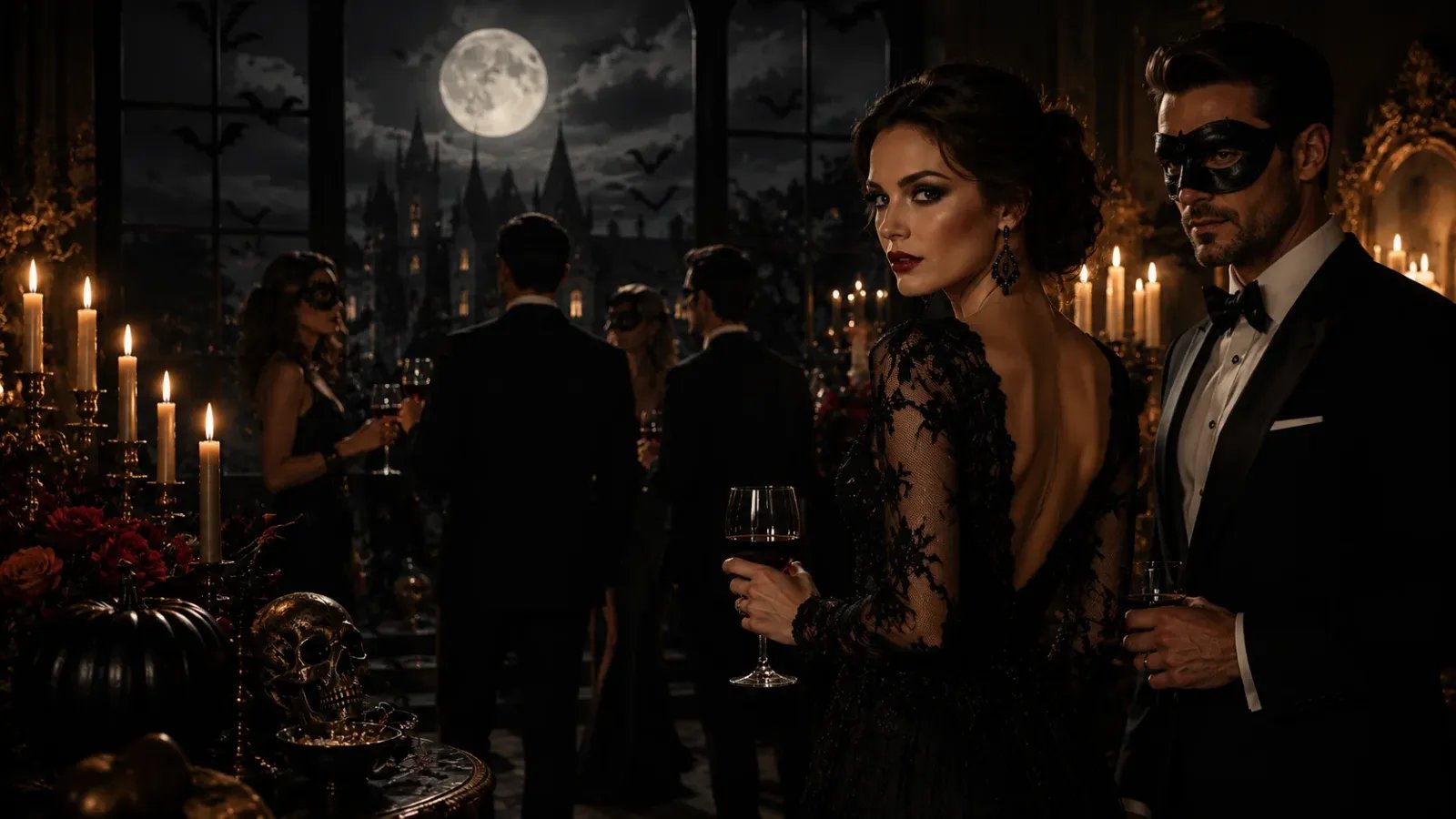
Far from being a modern commercial invention designed by candy conglomerates to sell sugary treats, Halloween is a complex cultural tapestry woven from ancient agricultural traditions, religious syncretism, and centuries of folklore. The widespread misconception that the holiday is uniquely American ignores its deep European roots, specifically the Celtic festival of Samhain, which marked the liminal space between the bountiful harvest and the deadly winter. As the Catholic Church expanded, it deliberately absorbed these pagan rituals, transforming a season of supernatural dread into All Hallows' Eve. By stripping away the plastic masks and neon wrappers of contemporary celebrations, we reveal a dark, scientifically fascinating, and historically rich timeline of human psychology, agricultural survival, and community bonding that will fundamentally change how you view the spookiest night of the year.
1. The Samhain God of Death Misconception
Many people, including some modern pop-historians, mistakenly believe that Samhain was the name of a Celtic god of the dead who was honored on October 31st. In reality, linguistic evidence proves that the Old Irish word samain simply translates to summer's end, marking the transition from the light half of the year to the dark half. The Celts divided their calendar by the agricultural seasons, and this specific date represented the final harvest before the harsh, unforgiving winter set in. It was a time when the veil between the living and the dead was thought to be thinnest, but there was never a specific deity named Samhain demanding sacrifices. The myth of the death god was largely popularized by an 18th-century British military surveyor named Charles Vallancey, whose flawed historical writings created a misunderstanding that persists today.
2. The Gruesome Faces of Root Vegetables
The iconic imagery of the glowing orange pumpkin is a relatively recent North American adaptation of a much older and far more unsettling European tradition. In Ireland and Scotland, the original jack-o'-lanterns were carved out of tough root vegetables, primarily turnips, mangelwurzels, and sometimes potatoes or beets. The legend stems from a folkloric figure named Stingy Jack, a man cursed to roam the earth with only a burning coal inside a hollowed-out turnip to light his way. Carving terrifying faces into these dense vegetables was a practical attempt by superstitious locals to frighten away Jack and other wandering evil spirits. When European immigrants arrived in the Americas, they quickly discovered that the native pumpkin was vastly superior for carving, permanently altering the aesthetic of the holiday.
3. The Myth of Stranger Poisoning
Every October, local news broadcasts issue dire warnings to parents about checking their children's candy for razor blades, poisons, and illicit drugs supposedly hidden by malicious strangers. Sociological research and extensive criminal investigations have repeatedly proven that this Halloween sadism is a persistent urban legend with virtually no basis in reality. In the extremely rare, tragic cases where children have been harmed by tainted Halloween candy, the perpetrator has almost universally turned out to be a family member attempting to secure a life insurance payout or cover up a prior crime. The fear of anonymous strangers weaponizing treats gained traction in the 1970s and 1980s, fueled by national anxieties rather than actual police reports. In truth, the most significant danger a child faces on Halloween night is the statistically proven increase in pedestrian traffic accidents.
4. The Ecological Origins of Bat Symbolism
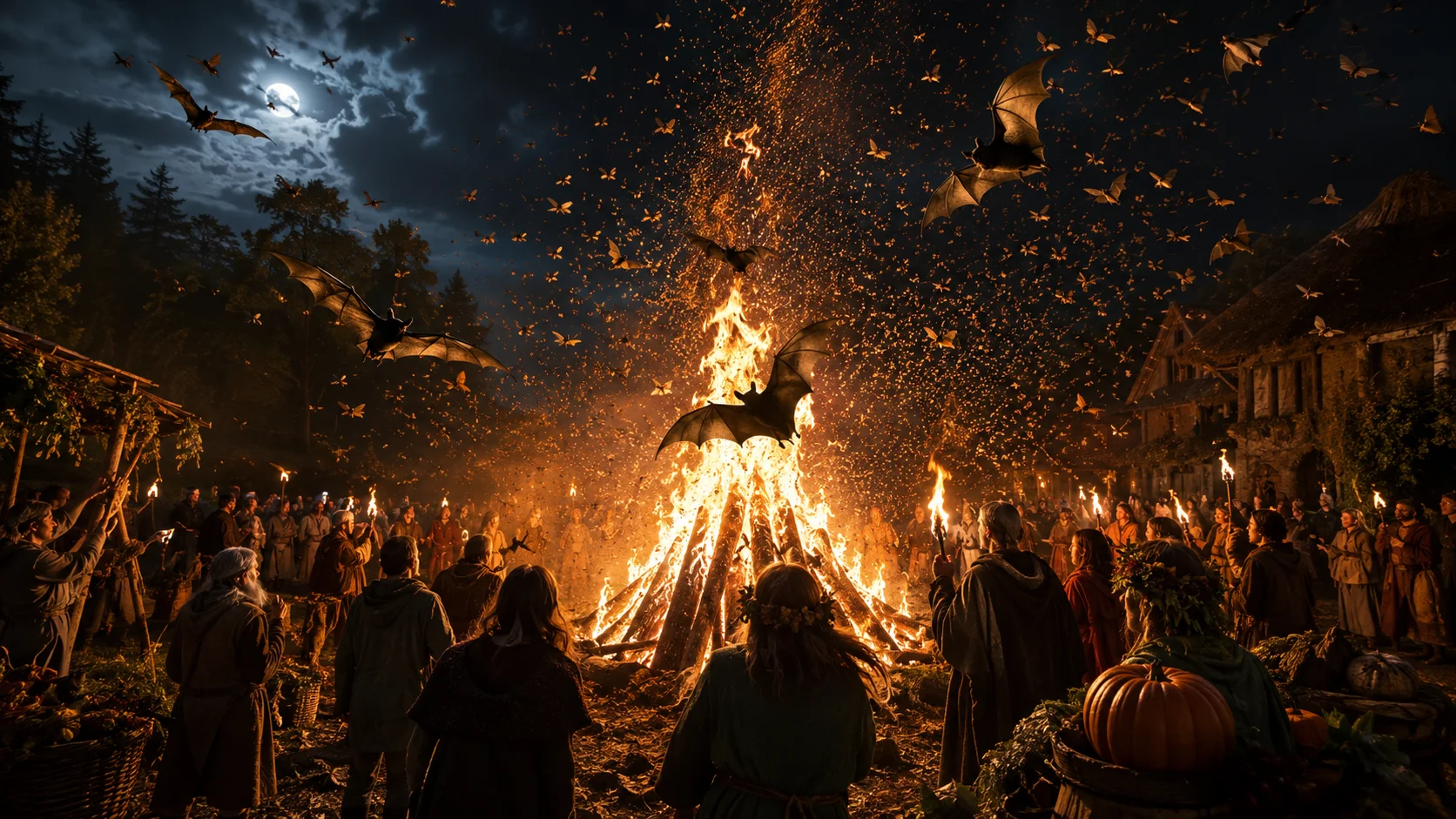
Bats are ubiquitous in Halloween iconography, often dismissed as a simple extension of vampire mythology, but their connection to the holiday is rooted in practical medieval ecology. During ancient Samhain celebrations, communities built massive roaring bonfires to ward off the encroaching winter darkness and provide light for their festivities. The intense heat and glowing light from these massive fires naturally attracted enormous swarms of nocturnal insects from the surrounding forests and fields. These dense clouds of insects subsequently drew local bat populations, who arrived to feast on the sudden abundance of prey. Consequently, the sight of bats darting erratically through the firelight became a permanent, natural association with the crisp autumn festival long before Bram Stoker ever wrote Dracula.
5. Matchmaking and Apple Bobbing
Today, apple bobbing is viewed as a harmless, albeit messy, children's party game, but it originally served as an intense fortune-telling ritual for young adults seeking romance. When the Roman Empire conquered Celtic territories, they brought with them the influence of Pomona, the goddess of fruit and trees, whose symbol was the apple. During early British Halloween celebrations, apples were believed to possess prophetic qualities, and bobbing for them was a frantic divination exercise to determine future spouses. The first person to successfully bite into a floating apple was predicted to be the next to marry, while other variations involved placing the bitten apple under a pillow to induce dreams of a future soulmate. Rather than focusing on ghosts and ghouls, many 18th and 19th-century Halloween parties were entirely dedicated to these superstitious matchmaking games.
6. The Economics of Trick-or-Treating
The modern concept of trick-or-treating is widely assumed to be an ancient tradition, but it was actually engineered as a social control mechanism in the early 20th century. During the 1920s and 1930s, Halloween in the United States had devolved into a night of widespread, expensive vandalism, where rowdy teenagers caused millions of dollars in property damage. Civic leaders, neighborhood committees, and local governments actively promoted the idea of offering treats to younger children to distract them from destructive pranks and keep them supervised. The phrase trick or treat first appeared in a Canadian newspaper in 1927, framing the exchange as a playful extortion where candy bought a homeowner protection from mischief. It wasn't until the post-World War II sugar rationing ended that candy companies fully capitalized on the trend, cementing the manufactured tradition into the cultural bedrock.
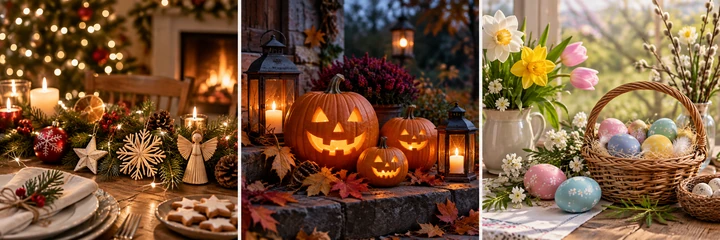 Holidays and Traditions
Explore the surprising, dark, and deeply fascinating origins of the world's most beloved holidays. From ancient pagan rituals to modern marketing triumphs, discover the true stories behind our annual traditions.
See All Facts
Holidays and Traditions
Explore the surprising, dark, and deeply fascinating origins of the world's most beloved holidays. From ancient pagan rituals to modern marketing triumphs, discover the true stories behind our annual traditions.
See All Facts
7. The Witch's Broomstick and Agricultural Fertility
The classic image of a wicked witch flying across a full moon on a broomstick has fascinating, grounded origins in pagan agricultural fertility rites. Before Christianity dominated Europe, rural farmers would engage in literal pitchfork and broom dances in their fields under the light of the full moon to encourage crop growth. Participants would straddle their household brooms and jump as high as possible, operating under the sympathetic magic belief that the height of their jumps would dictate the height of the upcoming harvest. As the church began to crack down on paganism, these harmless agricultural rituals were deliberately misinterpreted and demonized as satanic flight. Over centuries of folklore and Inquisition propaganda, the leaping farmers were transformed into malevolent sorceresses soaring through the night sky.
8. Soul Cakes and the Catholic Co-option
The act of going door-to-door for food on late autumn nights predates American trick-or-treating by several centuries, originating in the medieval Christian practice of souling. In an effort to overwrite Celtic pagan festivals, the Catholic Church established All Saints' Day on November 1st and All Souls' Day on November 2nd. On these days, the poor would visit the homes of wealthier families to beg for soul cakes, which were small, sweet breads flavored with cinnamon and nutmeg. In exchange for the pastries, the beggars promised to pray for the souls of the homeowners' deceased relatives, effectively speeding up their passage from Purgatory to Heaven. This transactional exchange of baked goods for spiritual favors laid the psychological and cultural groundwork for children demanding candy on modern front porches.
9. The Zoological Reality of Black Cats
Black cats have been unfairly persecuted on Halloween due to their association with witchcraft, but historically, they were often revered rather than feared. In ancient Egypt, all cats were sacred, and in early Celtic mythology, a fairy known as the Cat Sith took the form of a large black cat with a white spot on its chest. The demonization of black felines didn't occur until the Middle Ages, when paranoid European authorities declared them to be the familiars of witches, effectively viewing them as demons masquerading as animals. Interestingly, this dark reputation is geographically isolated; in much of the United Kingdom and Japan, a black cat crossing your path is still considered an omen of excellent luck and prosperity. Today, animal shelters often suspend the adoption of black cats during October not because of cult sacrifices, but to prevent them from being used as temporary living decorations.
10. Candy Corn Was Originally Chicken Feed
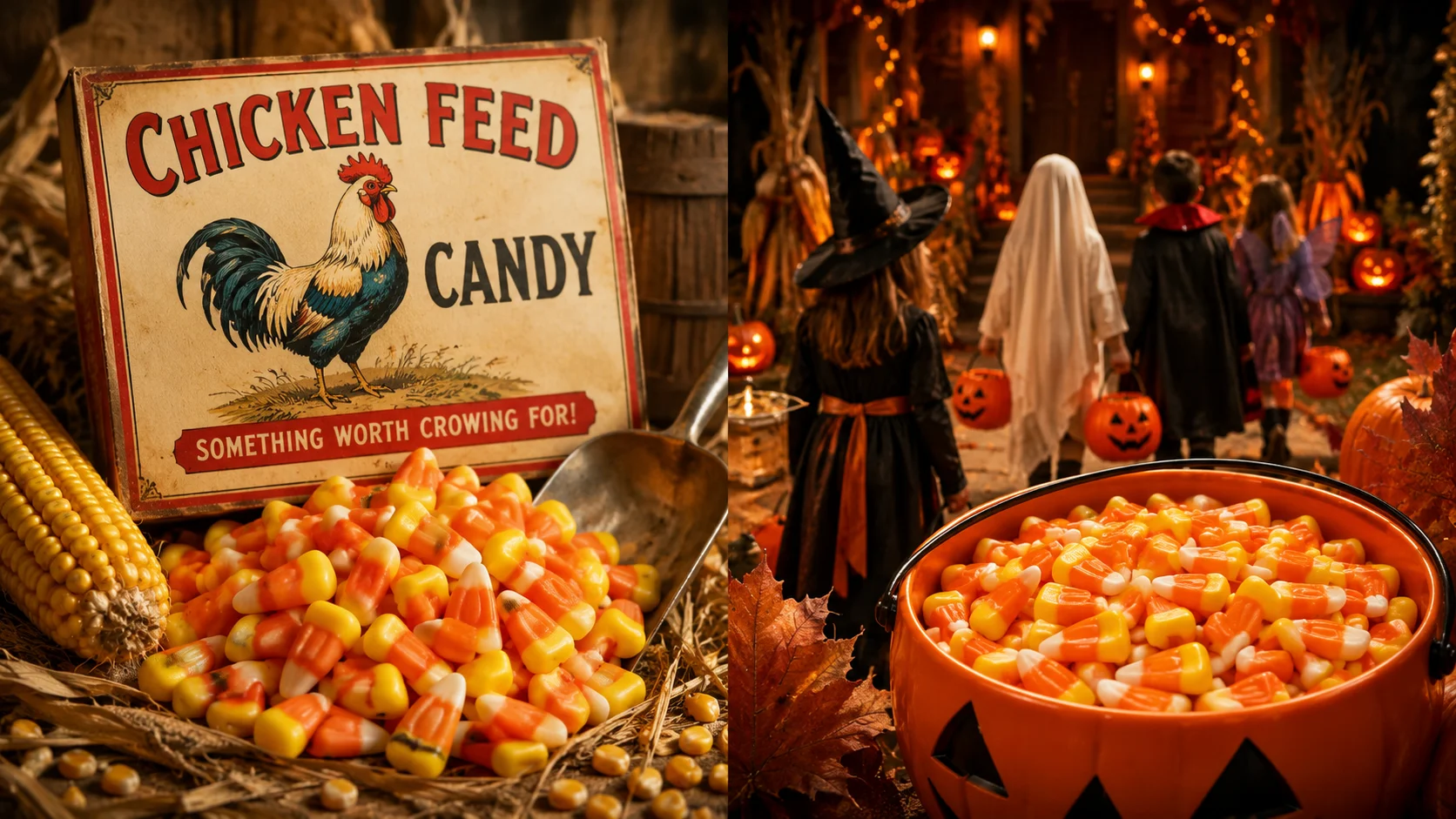 Created by George Renninger of the Wunderle Candy Company, the tricolor treat was initially marketed to America's largely agrarian population under the name Chicken Feed. The candies were designed to look like kernels of corn, and the original packaging even featured a rooster with the slogan that it was something worth crowing for. Because producing the three distinct layers required laborious hand-pouring, it was a specialized treat available year-round, mostly celebrated in the summer and early fall. It wasn't until the 1950s, when trick-or-treating became a national obsession and candy marketing shifted toward autumn harvests, that it was rebranded specifically for Halloween.
11. The Disguise of the Dead
Wearing a costume on Halloween is not simply a modern excuse to dress up as a favorite movie character; it stems from a primal, desperate need for supernatural camouflage. During the Celtic festival of Samhain, people genuinely believed that ghosts, demons, and restless ancestors walked the earth and could interact with the living. To avoid being recognized and dragged into the underworld by a vengeful spirit, villagers would don terrifying masks woven from straw and animal skins when leaving their homes at night. The logic was that if you looked as ghastly as the wandering ghouls, the spirits would mistake you for a fellow demon and leave you alone. This ancient survival tactic, known as guising, evolved over centuries from frightening protective gear into the playful superhero and monster outfits we see today.
12. The Color Psychology of Orange and Black
The ubiquitous Halloween color palette of orange and black is not a random marketing choice, but rather a profound symbolic representation of the season's dual nature. Orange represents the vitality of the autumn harvest, capturing the hues of changing leaves, ripe pumpkins, and the flickering warmth of life-sustaining bonfires. Conversely, black serves as a stark reminder of the encroaching winter, symbolizing the death of the summer flora, the shortening of days, and the thinning veil of the spirit world. Together, these colors encapsulate the entire psychological tension of the ancient holiday, contrasting the celebration of agricultural abundance directly against the terrifying approach of cold and darkness. This stark visual contrast has remained ingrained in the human psyche for centuries, long before artificial dyes and plastic decorations existed.
13. Owls as Witches in Disguise
While bats and black cats get most of the attention, the owl holds a surprisingly dark and scientifically misunderstood place in Halloween history. During the days of the Roman Empire and stretching into medieval Europe, the nocturnal screeching of owls was deeply feared as an omen of impending death and disaster. Superstitious locals believed that owls were actually witches who had shapeshifted to drink the blood of infants or eavesdrop on unsuspecting villagers in the dark. From a biological standpoint, owls are practically silent flyers, which only added to their ghostly, supernatural reputation when they suddenly appeared out of the shadows. Today, their inclusion in Halloween imagery is a lingering echo of an era when nocturnal predatory birds were entirely misunderstood by early science.
14. Silly String is Illegal in Hollywood on Halloween
While Halloween has a reputation for lawless mischief, modern municipalities take the threat of vandalism so seriously that they have enacted bizarre, highly specific legislation. In Hollywood, California, it is completely illegal to possess, use, or sell Silly String on public property from midnight on October 31st to noon on November 1st. The ordinance was passed in 2004 after massive crowds on Hollywood Boulevard caused hundreds of thousands of dollars in property damage and environmental hazard by spraying thousands of cans of the brightly colored polymer. The cleanup became so prohibitively expensive and the empty cans caused so many slipping hazards for pedestrians that the city instituted a maximum fine of one thousand dollars for violators. This hyper-local law demonstrates how the ancient tradition of Halloween pranks continues to clash with modern urban infrastructure.
15. The Etymology of Halloween
Despite its deeply pagan roots, the actual word Halloween is entirely Christian in origin and serves as a linguistic testament to the church's cultural dominance. In the eighth century, Pope Gregory III designated November 1st as a time to honor all saints, a day known in Middle English as Alholowmesse, or Allhallowmas. The evening prior to this holy day was referred to as All Hallows' Eve, the time when spiritual preparations for the feast were meant to occur. Over several generations, linguistic laziness and dialectal shifts in Scotland and Ireland caused the phrase to be shortened and slurred together into Hallowe'en, before finally dropping the apostrophe entirely. Therefore, every time someone says the name of this spooky holiday, they are actually speaking a corrupted phrase meant to honor the holiest figures in the Catholic tradition.
Sources & References
This AI-assisted post was rigorously curated and fact-checked for accuracy by:
 Martin Roháček
How fun was this article? 🤔
Tap a star to rate it
🧠 Quiz: How closely were you paying attention?
10 questions — all answers are in the article above!
Enjoyed these facts? There's more! 💌
Fresh fun facts in your inbox. No spam, ever.