The Enchanted Mirror: 15 Fascinating Facts About Lake Bled
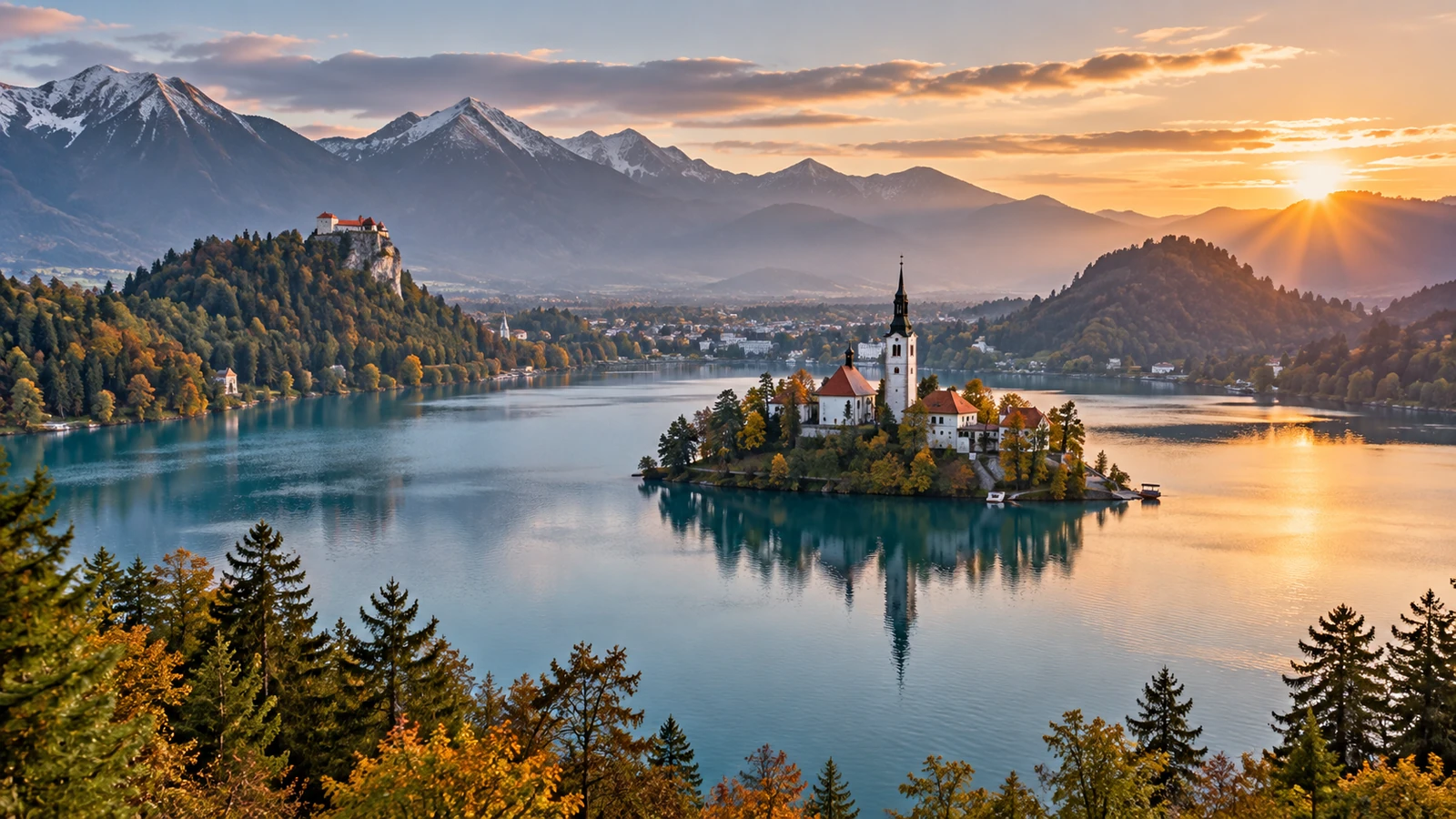
Nestled in the Julian Alps of northwestern Slovenia, Lake Bled is renowned for its emerald waters, tear-drop island, and dramatic cliffside castle. Beyond its fairy-tale aesthetic lies a rich tapestry of pagan history, royal diplomatic retreats, and centuries-old rowing guilds. From thermal springs hidden deep beneath its bed to a world-famous dessert born in the mid-20th century, this Alpine gem holds endless secrets. Discover the captivating history, legend, and geology that make Lake Bled one of Europe's most enchanting destinations.
1. A Melding of Glacial Ice and Thermal Springs
Lake Bled owes its unique geology to a combination of intense glacial activity and underground geothermal energy. During the last Ice Age, the powerful Bohinj Glacier carved out a deep natural basin into the limestone valley floor. As the climate warmed and the ice retreated, the basin filled with water, creating the iconic lake seen today. Adding to its unique character, thermal springs feed into the northeastern section of the lake, keeping the water surprisingly mild and reaching temperatures around 23°C (73°F) during the summer months. This blend of frigid mountain water and warm subterranean springs contributes to the lake's unusual clarity and microclimate.
2. The Island Church Sits on an Ancient Pagan Temple Site
Long before the Church of the Assumption of Mary was erected on Bled Island, the small landmass served as a sacred pagan worship site. Archaeologists have discovered remnants of an ancient temple dedicated to Živa, the Slavic goddess of love and fertility, dating back to the early Middle Ages. When Christianity swept through the region in the 8th century, the pagan sanctuary was destroyed and replaced by a wooden Christian chapel. Over the centuries, the chapel evolved into the magnificent Gothic and later Baroque church that stands on the island today. Visitors still walk the very grounds where pre-Christian Slavs once conducted sacred spring rituals.
3. Bled Castle is Slovenia's Oldest Castle Structure
Perched dramatically atop a 130-meter steep limestone cliff overlooking the lake, Bled Castle is officially recorded as the oldest castle in Slovenia. First mentioned in a written deed issued by German King Henry II in 1011 AD, the fortress originally consisted of a single Romanesque tower protected by wall fortification. Over the centuries, successive rulers added defensive towers, residential wings, and a Renaissance court to transform it into a formidable stronghold. Today, the castle houses a historical museum, a restored printworks, and a wine cellar where visitors can bottle their own wine. Its elevated vantage point offers one of the most famous panoramic views in Central Europe.
4. Pletna Rowers Operate an Exclusive Family-Owned Guild
Transportation to Bled Island is traditionally provided by pletna boats, flat-bottomed wooden vessels propelled by a single standing oarsman using two oars. This specialized technique, known as stehrudern, requires immense balance and strength, as the rower stands at the stern of the vessel. The right to operate a pletna is strictly regulated and historically inherited; Empress Maria Theresa granted exclusive navigation rights to select local families in the 18th century to ensure their livelihood. Today, there are only 23 official pletna licenses in existence, passed down from generation to generation within the same bloodlines. The boatmen, known as pletnarji, take immense pride in preserving this centuries-old tradition.
5. Wedding Tradition Requires the Groom to Carry the Bride Up 99 Steps
Couples from all over the world travel to Lake Bled to tie the knot at the Church of the Assumption, but the ceremony comes with a rigorous test of endurance. To reach the church entry, newlyweds must ascend a steep flight of 99 monumental stone steps built in 1655. According to local custom, the groom must carry his bride up all 99 steps in complete silence while she remains entirely quiet throughout the climb. Successfully completing the ascent is said to guarantee a long, happy, and prosperous marriage. Once inside the church, newlyweds ring the famous 1534 wishing bell to cement their vows.
6. The Sunken Bell Legend Inspired a Royal Tradition
The famous wishing bell inside the island church has a tragic backstory rooted in local folklore. Legend has it that a young widow named Poliksena, living in Bled Castle, melted down all her gold and silver to cast a bell for the island church in memory of her murdered husband. However, during a fierce storm, the boat transporting the bell capsized, sending the crew and the heavy bronze bell to the bottom of the lake. Devastated, Poliksena moved to Rome and entered a convent, where the Pope heard her sorrowful story. Touched by her grief, Pope Clement VII consecrated a new bell and sent it to Bled Island in 1534, which visitors still ring three times today to request a wish.
7. Swiss Naturopath Arnold Rikli Transformed Bled Into a World-Renowned Spa
In the mid-19th century, Lake Bled transformed from a quiet pilgrimage site into a fashionable European health resort thanks to Swiss naturopath Arnold Rikli. Arriving in 1855, Rikli recognized the therapeutic qualities of Bled’s fresh Alpine air, thermal spring water, and abundant sunshine. He established a natural healing institute that prescribed a strict regimen of cold thermal baths, sunbathing on open-air verandas, and barefoot walking hikes up nearby peaks. Wealthy aristocrats and prominent writers flocked to the lake to cure nervous ailments, breathing difficulties, and fatigue. Rikli’s holistic health movement laid the foundation for Slovenia's modern wellness tourism industry.
8. Lake Bled Served as a Cold War Retreat for World Leaders
During the 20th century, Yugoslav leader Marshal Josip Broz Tito chose Lake Bled as his preferred summer residence, constructing a grand estate on the southern shore. Known as Vila Bled, the property hosted numerous high-profile world leaders and diplomats during the height of the Cold War. Notable guests included Nikita Khrushchev, Kim Il-sung, Indira Gandhi, and King Hussein of Jordan, who gathered for off-the-record meetings far from the watchful eyes of Western intelligence. Tito was known to enjoy rowing his own private pletna across the serene waters to showcase the beauty of Slovenia. Today, Vila Bled operates as a luxury hotel, preserving much of its original mid-century modernist decor and artwork.
9. The Culinary Icon Kremšnita Was Created Here in 1953
No trip to Lake Bled is complete without tasting Bled Cream Cake, locally known as Kremšnita. This legendary dessert was invented in 1953 by pastry chef Ištvan Kovačevič at the kitchen of the Park Hotel in Bled. The cake features a precise balance of crisp golden puff pastry, rich egg vanilla custard, and light whipped cream, topped with a delicate dusting of powdered sugar. Chef Kovačevič refined the recipe using natural ingredients, ensuring the cake was light enough to wobble when served. To date, the Park Hotel pastry shop has served more than 15 million pieces of this protected trademarked delicacy.
10. Excavations Uncovered Over 100 Early Medieval Slavic Graves
Bled Island is not only a spiritual site but also an incredible archaeological treasure chest. During extensive restorations in the mid-20th century, historians uncovered 124 early medieval graves dating from the 9th to 10th centuries. The burials contained well-preserved human remains along with intricate bronze jewelry, iron tools, and pottery, offering rare insight into the lives of early Slavic settlers. These findings proved that the island was continuously inhabited and revered long before the construction of the present stone church. Many of the artifacts recovered from the island dig are currently displayed in the Bled Castle Museum.
11. It Has Hosted Four World Rowing Championships
Lake Bled is widely regarded as one of the best natural rowing venues in the world due to its still waters and sheltered geography. The lake is 2.1 kilometers long and up to 1.4 kilometers wide, perfectly matching the standard international 2,000-meter racing distance. Surrounding mountain ranges protect the surface from harsh winds, resulting in glassy water conditions ideal for elite competition. Because of these pristine conditions, Lake Bled hosted the World Rowing Championships four times: in 1966, 1979, 1989, and 2011. Slovenian rowers have also won multiple Olympic medals, using the lake as their primary training ground.
12. Microclimates Create Shrouding Fogs and Rare Total Freezes
The unique geographic location of Lake Bled creates a microclimate that frequently blankets the lake in dramatic mist. In autumn and winter, cold mountain air settles over the warmer surface water heated by subterranean springs, producing low-lying fog banks that envelop the island. During exceptionally harsh winters, the lake freezes over completely, turning the water into a vast sheet of ice. Historically, locals and tourists could ice skate or walk across the frozen surface all the way to the island church. While warming global trends have made complete freezes less frequent in recent decades, winter mists continue to draw photographers worldwide.
13. The Lake Has No Major Surface Tributary
Unlike many Alpine lakes that are fed by muddy glacial rivers carrying sediment, Lake Bled receives almost no surface river inflow. It is primarily fed by underground thermal springs and minor surface rivulets that drain the surrounding hillsides. A single small outlet, the Jezernica stream, drains water from the lake into the Sava Bohinjka River. This lack of heavy river runoff prevents sediment from clouding the water, giving Lake Bled its signature crystal-clear turquoise hue. The clarity allows observers to easily see fish swimming several meters beneath the surface.
14. Cliffside Caves Provide Habitat for Rare Bat Species
The steep limestone cliffs surrounding Lake Bled, particularly near Bled Castle and the nearby Straža hill, are home to complex cave systems and deep crevices. These protected rock formations create ideal roosting habitats for several rare and endangered European bat species. During summer evenings, colonies of bats emerge from the cliff faces to hunt for insects over the tranquil water surface. Local conservation groups frequently organize quiet nocturnal boat tours where visitors can listen to bat echolocation signals using special ultrasonic detectors.
15. Viewpoints Like Ojstrica Offer Unrivaled Sunrise Views
To capture the classic post-card view of Lake Bled, visitors hike up to the rocky outcrops of Ojstrica and Mala Osojnica on the lake's western shore. Ojstrica rises 611 meters above sea level and provides a sheer drop view overlooking the emerald water, the island church, and the castle backdrop. Photographers and early morning hikers make the steep 20-minute trek before dawn to catch the golden hour. Watching the rising sun cast pink light across the Julian Alps while mist hovers over the island is considered the quintessential Lake Bled experience.
Sources & References
This AI-assisted post was rigorously curated and fact-checked for accuracy by:
 Martin Roháček
How fun was this article? 🤔
Tap a star to rate it
🧠 Quiz: How closely were you paying attention?
10 questions — all answers are in the article above!
Enjoyed these facts? There's more! 💌
Fresh fun facts in your inbox. No spam, ever.