
The Hysterical Tragedy: 15 Fascinating Facts About the Salem Witch Trials
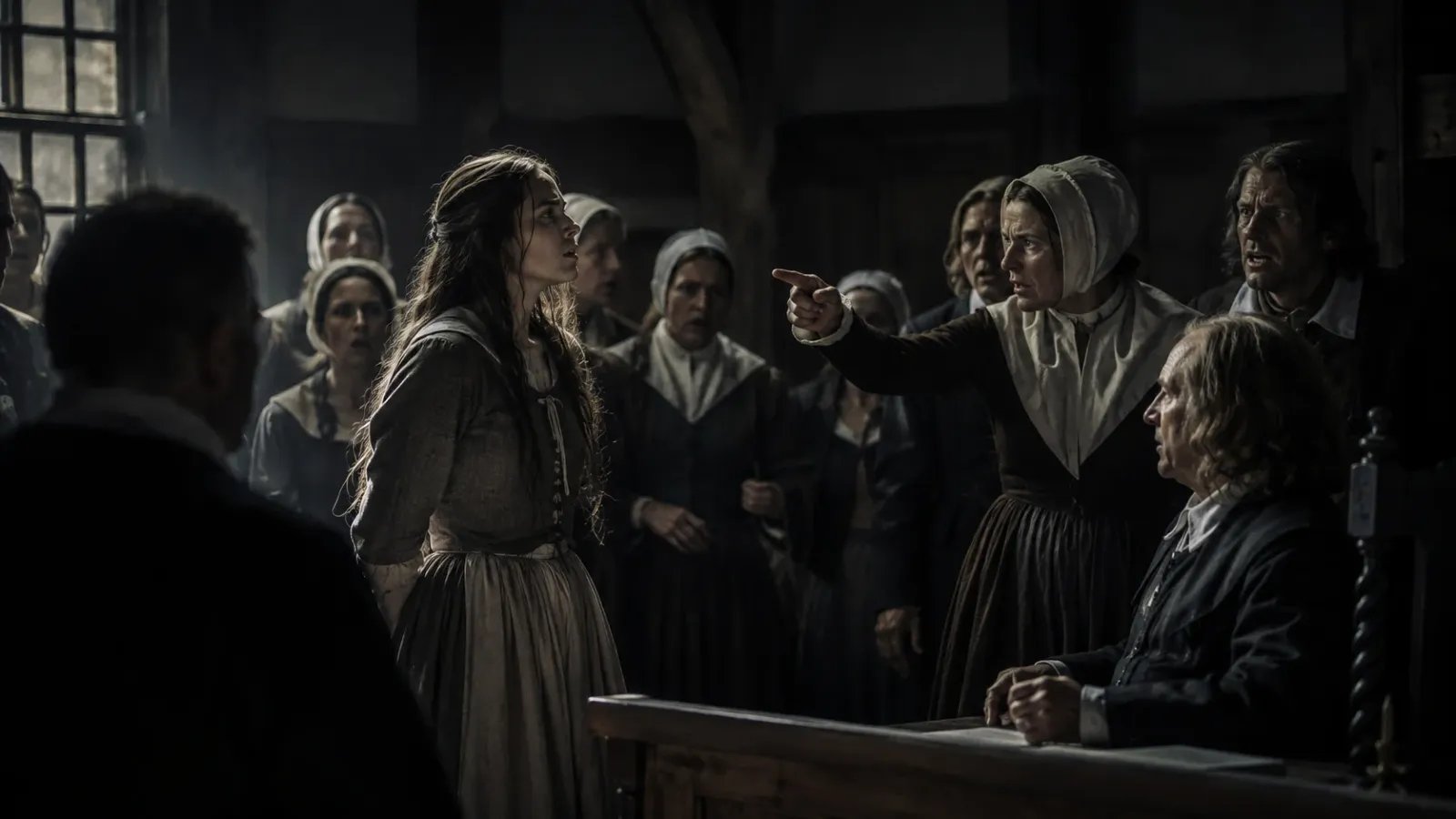
Forget the burning stakes of Hollywood myth. The 1692 Salem witch trials were a complex socio-political catastrophe fueled by land disputes, religious extremism, and mass paranoia. Discover fifteen surprising truths that shatter the popular folklore of this dark history.
1. Nobody was burned at the stake during the Salem witch trials.
Contrary to popular cinematic depictions and European historical precedents, not a single accused witch in Salem was burned to death. The Massachusetts Bay Colony operated under English law, which classified witchcraft as a felony punishable by hanging rather than a heresy punishable by fire. Of the twenty people executed during the hysteria, nineteen were hanged on Proctor's Ledge, and one was pressed to death under heavy stones.
2. Two dogs were formally accused, tried, and executed for allegedly participating in witchcraft.
The paranoia in Salem extended far beyond human suspects, reflecting the deep-seated Puritan belief in animal familiars. When a dog in Andover was accused of affliction, and another in Salem was believed to be controlled by a local accused witch, the community's terror overrode common sense. Both animals were formally condemned and killed, demonstrating how the mass hysteria fractured the colonists' grip on reality and extended legal culpability to the natural world.
3. The hysteria did not originate in the prosperous port of Salem Town, but rather in the impoverished agrarian outpost of Salem Village.
Though historically lumped together as Salem, the region was bitterly divided into two distinct communities with competing economic interests. Salem Town was a thriving, cosmopolitan mercantile hub, while Salem Village was a struggling farming community demanding independence. The initial accusations started in the village, heavily driven by poor farmers targeting the affluent merchants and upwardly mobile citizens connected to the town, exposing deep class resentments.
4. Confessing to being a witch was paradoxically the only guaranteed way to survive the Salem witch trials.
In a twisted subversion of typical legal self-preservation, maintaining your innocence in the Salem court almost assuredly resulted in a death sentence. The Puritan authorities believed that a confession demonstrated repentance and placed the individual back into the hands of God for judgment. Consequently, those who courageously refused to lie and held fast to their innocence were sent to the gallows, while the individuals who falsely confessed to witchcraft were spared execution so they could identify other alleged conspirators.
5. The youngest person to be imprisoned for witchcraft was a four-year-old girl named Dorothy Good.
When Sarah Good was accused of witchcraft, her toddler daughter Dorothy was interrogated by local magistrates. The terrified four-year-old gave confused, easily manipulated answers that the judges interpreted as a confession to possessing a snake familiar. Dorothy was shackled and thrown into a dark, freezing dungeon for nine months alongside her mother, an ordeal that caused severe psychological trauma from which the child never recovered, leaving her historically documented as permanently mentally incapacitated.
6. The legal proceedings relied heavily on an absurd concept called spectral evidence.
The prosecution's strongest weapon was spectral evidence, which consisted of testimony from accusers who claimed the invisible spirit, or specter, of the accused was actively pinching, biting, or choking them during the trial. Because this evidence was entirely invisible to the judges, the jury, and everyone else in the room, it was impossible for the defense to refute. The eventual discrediting and banning of spectral evidence by prominent ministers ultimately led to the collapse of the trials.
7. A fascinating biological theory attributes the accusers' erratic behavior to a fungus found in moldy bread.
In 1976, behavioral scientist Linnda Caporael proposed that the bizarre fits, muscle spasms, and hallucinations reported by the afflicted girls were actually symptoms of convulsive ergotism. Ergot is a naturally occurring fungus that infects rye grain during damp, cold winters, which were the exact conditions present in Salem in 1692. Because ergot contains lysergic acid, the natural precursor to LSD, it is scientifically plausible that the early accusers were unknowingly suffering from accidental psychedelic food poisoning rather than spiritual possession.
8. An eighty-one-year-old farmer was slowly pressed to death under heavy boulders over the course of three days.
Giles Corey, a wealthy and stubborn elderly farmer, realized that if he was convicted of witchcraft, his vast estate would be confiscated by the government, leaving his heirs destitute. To prevent this, Corey refused to enter a plea of guilty or not guilty, a legal stalemate that stalled the trial. In an attempt to force a plea, the local sheriff subjected him to peine forte et dure, stacking heavy stones on his chest, but Corey simply requested more weight until he succumbed to the crushing pressure, successfully protecting his family's inheritance.
9. The infamous Court of Oyer and Terminer maintained a staggering one hundred percent conviction rate.
Governor William Phips established a special court, translated from French as to hear and determine, specifically to clear the backlog of witchcraft cases clogging the local jails. Chief Magistrate William Stoughton led the proceedings with a ruthless presumption of guilt, denying the accused legal counsel and heavily favoring the theatrical fits of the accusers. Every single person who was brought to trial before this specific court was found guilty, making it one of the most fatal and compromised judicial bodies in American history.
10. Deeply entrenched family rivalries and property disputes were the hidden catalysts for many death sentences.
Behind the veil of religious piety lay a vicious web of localized vendettas, primarily orchestrated by the powerful Putnam family. The Putnams used the hysteria to systematically accuse members of the rival Porter family and their allies, effectively weaponizing the legal system to settle grudges over property lines, grazing rights, and church leadership. A spatial mapping of the accusers and the accused reveals a stark geographical divide that aligns almost perfectly with existing factional property disputes in the village.
11. The first woman to confess intentionally wove Indigenous and Caribbean folklore into her testimony to save her own life.
Tituba, a woman enslaved by Reverend Samuel Parris, realized she was an easy scapegoat for the afflicted girls and chose to craft a sensational confession to stall her execution. She captivated the magistrates with vivid tales of red cats, talking dogs, a tall man from Boston, and a sinister book where witches signed their names in blood. By blending Puritan fears with elements of non-European folklore, Tituba validated the community's deepest terrors and provided the structural blueprint that shaped the rest of the accusations.
12. The tragic events were heavily exacerbated by the mass trauma of a brutal frontier war.
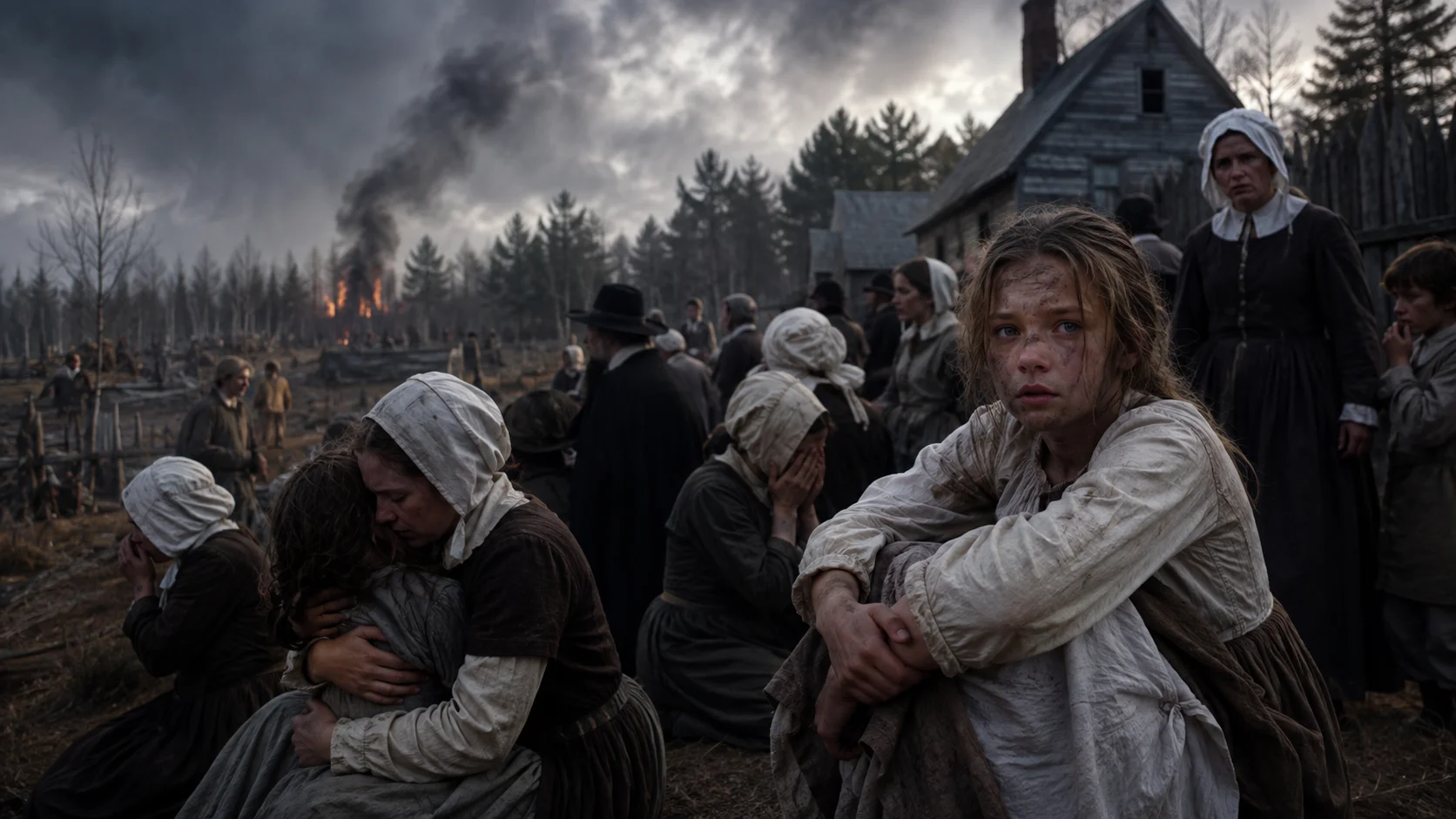
In 1692, Massachusetts was reeling from the devastating effects of King William's War, a bloody conflict with French colonists and their Wabanaki allies. Many of the afflicted girls were war refugees who had been orphaned by violent frontier raids in Maine, leaving them severely traumatized and displaced. Historians argue that the girls projected their profound post-traumatic stress and paralyzing fear of attacks onto their neighbors, conflating the terrifying wilderness outside their village with the spiritual darkness of the devil.
13. The trials abruptly ended because the accusers made the fatal mistake of targeting the governor's wife.
The hysteria remained virtually unchecked until the autumn of 1692, when the accusers' unchecked power led them to point their fingers at elite members of society. When rumors circulated that Mary Phips, the wife of Massachusetts Governor William Phips, was involved in witchcraft, the governor immediately took decisive action. To protect his wife, Phips dissolved the Court of Oyer and Terminer, prohibited further arrests, and eventually pardoned all the remaining suspects languishing in jail.
14. One of the executed men was a former village minister who flawlessly recited the Lord's Prayer at the gallows.
George Burroughs was an unconventional figure who had previously served as the minister of Salem Village before leaving over a bitter salary dispute. He was hauled back from Maine to face trial, accused by his former congregation of being the ringleader of the local witch cult. At his execution, Burroughs perfectly recited the Lord's Prayer, a feat Puritans believed was impossible for an agent of the Devil, which deeply unsettled the crowd, though authorities quickly intervened to ensure the hanging proceeded.
15. It took more than three centuries for the final victim of the Salem witch trials to be legally exonerated.
While the Massachusetts government issued early apologies and pardons for many victims in the early 1700s, some individuals slipped through the historical and legal cracks. Elizabeth Johnson Jr., who was condemned to death in 1692 but reprieved at the last minute, was never formally cleared of her charges. It was not until 2022, after a dedicated lobbying campaign by an eighth-grade civics class in Massachusetts, that the state legislature officially exonerated her, finally closing the legal books on the Salem witch trials after 330 years.
Sources & References
This AI-assisted post was rigorously curated and fact-checked for accuracy by:
 Martin Roháček
How fun was this article? 🤔
Tap a star to rate it
🧠 Quiz: How closely were you paying attention?
10 questions — all answers are in the article above!
Enjoyed these facts? There's more! 💌
Fresh fun facts in your inbox. No spam, ever.