From Yellowstone to the White House: 15 Facts About Gerald Ford
Gerald Ford was a Yellowstone ranger, a Yale boxing coach and a naval officer caught in a deadly typhoon. His presidency also involved a controversial pardon, two assassination attempts, Vietnamese children airlifted for adoption and a disturbing conversation before Indonesia invaded East Timor.
1. He was born with an entirely different name
The future president was born Leslie Lynch King Jr. in Omaha in 1913. After his parents separated, his mother married Gerald R. Ford, whose name the boy used while growing up in Michigan. He did not legally become Gerald Rudolph Ford Jr. until December 1935. His familiar presidential name therefore reflected the stepfather who raised him, rather than his biological father.
2. His university benched his Black teammate to satisfy a visiting team
In 1934, Michigan accepted Georgia Tech's demand that Willis Ward, its Black football star, sit out their game. Ford considered refusing to play, but Ward urged his friend to take the field. The story is sometimes presented simply as evidence of Ford's loyalty. It also records a discriminatory decision by Michigan itself, and the pressure placed on Ward to absorb that injustice.
3. He passed up professional football and coached boxing without experience
After graduating from Michigan, Ford received offers from the Detroit Lions and Green Bay Packers. Instead, he took a job at Yale as an assistant football coach and boxing coach, despite having no background in boxing. He wanted to study law, but initially had to coach without admission to the law school. Yale finally admitted him on a trial basis in 1938.
4. His Yellowstone summer left a paper trail in an FBI file
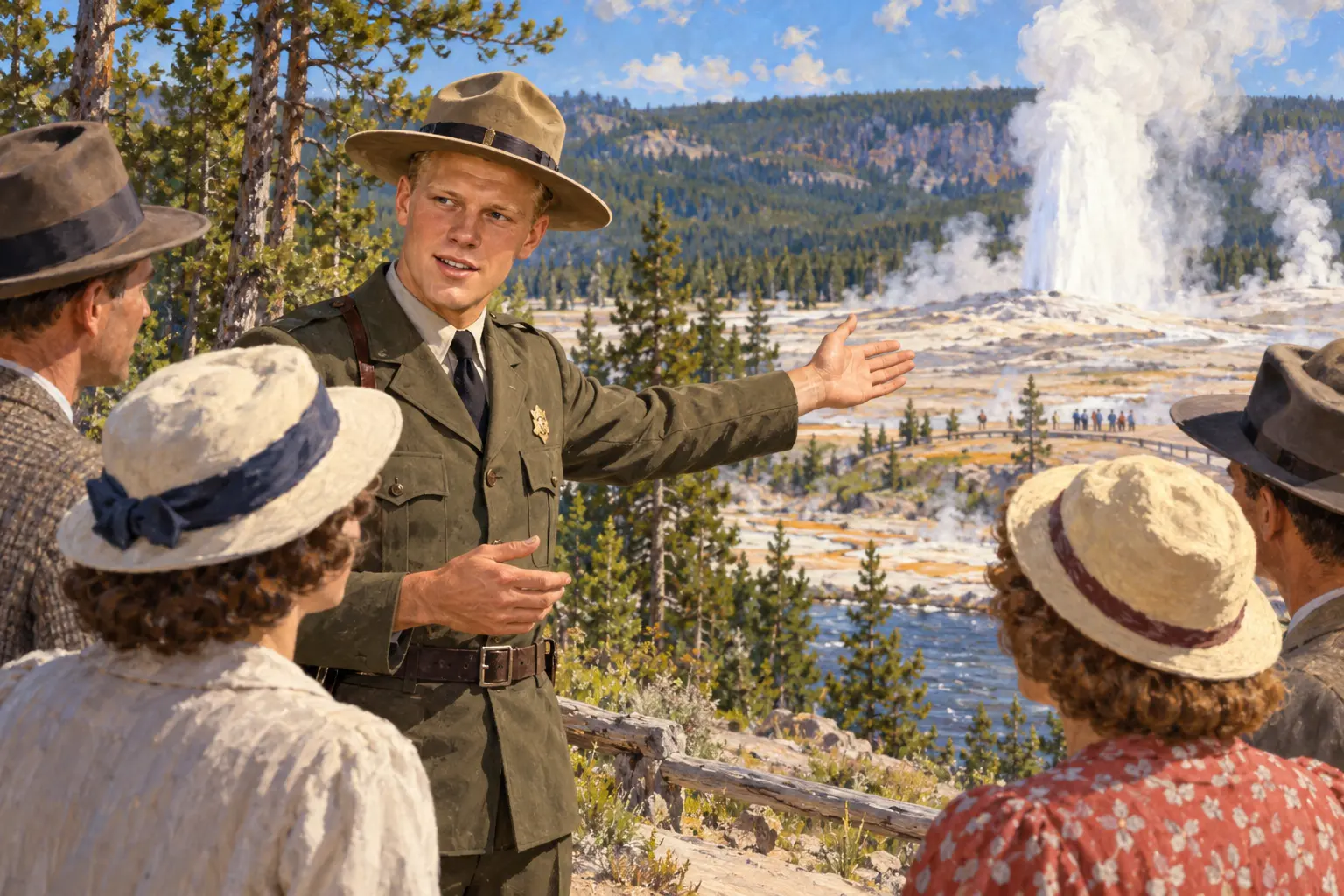
Ford worked as a seasonal Yellowstone ranger in 1936. A later FBI employment inquiry verified his service from June 16 to September 3 and recorded a favorable assessment of his work. His duties included guarding the park's bear-feeding truck, a practice from a very different era of wildlife management. Decades later, he returned to Yellowstone as president and met a former colleague.
5. A typhoon nearly swept him off an aircraft carrier
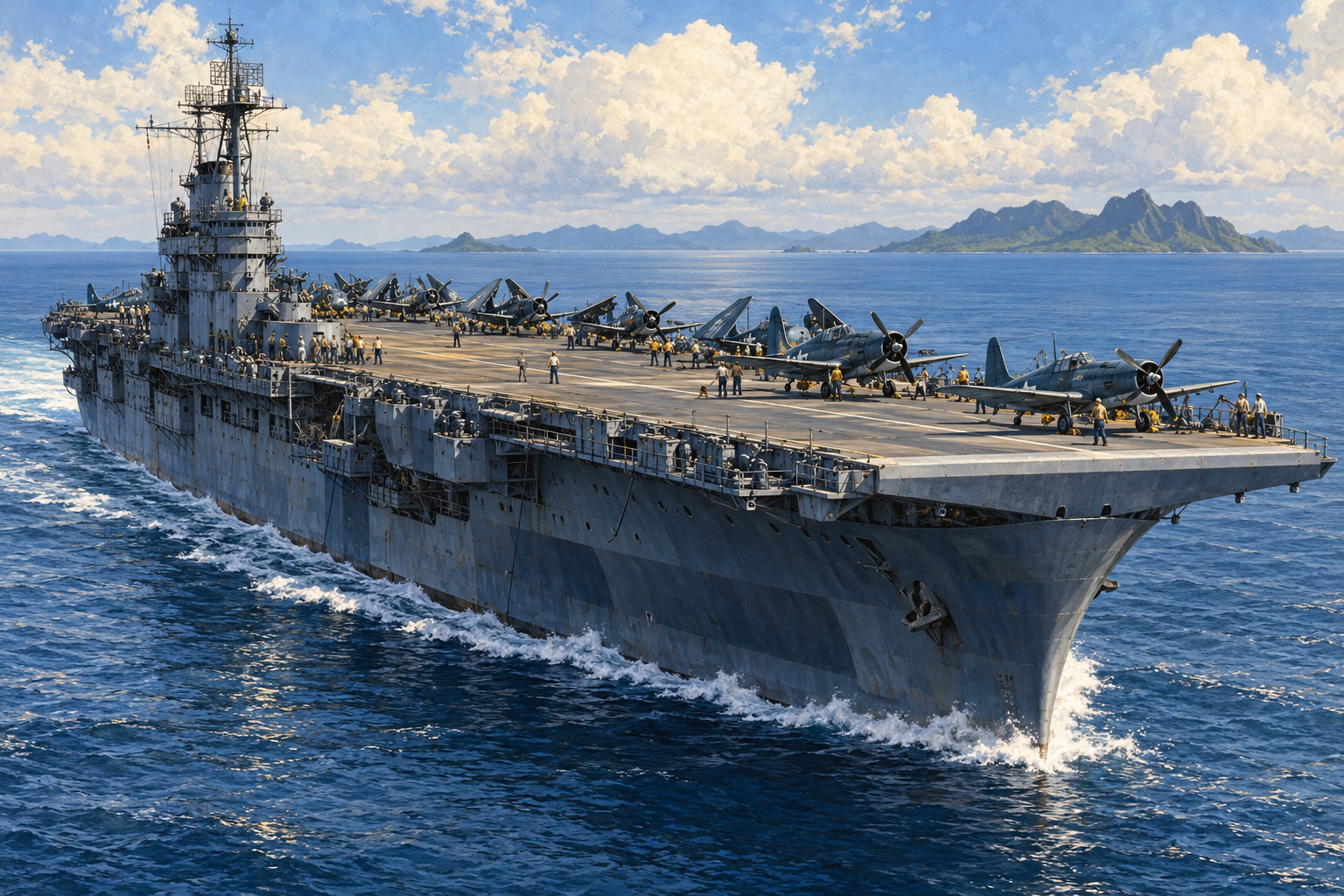
During World War II, Ford served aboard USS Monterey. In December 1944, a devastating typhoon struck the fleet, and he nearly went overboard as the carrier rolled in the storm. Loose aircraft and a serious onboard fire added to the danger. The episode was a genuine threat to his life, quite unlike the later television image of Ford as a harmlessly clumsy former athlete.
6. The office he wanted was Speaker of the House
Ford spent years hoping to lead the House of Representatives, rather than campaigning for the presidency. Watergate changed his route. Nixon nominated him for the vacant vice presidency under the Twenty-Fifth Amendment, and Nixon's resignation then made him president in August 1974. He reached both national offices through constitutional succession and congressional confirmation, without winning an election for either position.
 You might also like
Flour Sacks and Morning Workouts: 15 Facts About Herbert Hoover
7. Nixon's pardon took him before a congressional committee—and later won an award
Ford pardoned Richard Nixon on September 8, 1974, provoking intense criticism and the resignation of his press secretary. He subsequently appeared before a House Judiciary subcommittee to deny that the pardon resulted from a deal. In 2001, the Kennedy Library awarded him its Profile in Courage Award for that decision. The later honor reflects one reassessment of a choice that remains historically contentious.
8. Betty Ford made a private diagnosis a public conversation
Only weeks after becoming first lady, Betty Ford underwent surgery for breast cancer in September 1974. The White House's openness about her diagnosis challenged the custom of treating such illnesses as unmentionable. Her willingness to discuss the experience encouraged public attention to breast health. This was not merely a detail of the president's family life: Betty used the visibility of her own illness to change the conversation.
9. Two women attempted to assassinate him seventeen days apart
On September 5, 1975, Lynette Fromme pointed a pistol at Ford in Sacramento; Secret Service agent Larry Buendorf intervened before she fired. On September 22, Sara Jane Moore fired at him in San Francisco, where bystander Oliver Sipple helped stop her. These were separate attacks, not two versions of one incident. Accounts saying Fromme's gun fired or backfired misdescribe the first attempt.
 US Presidents
Discover the eccentricities, secret talents, and surprising hidden lives of America's most influential presidents, from frontier wrestlers to covert strategists.
See All Facts
10. His Helsinki signature did not recognize Soviet ownership of the Baltic states
Ford joined leaders of 34 other countries in signing the Helsinki Final Act in 1975. Its commitments included human rights and freer exchanges, alongside European security. Critics feared acceptance of Soviet domination, but Ford explicitly reaffirmed that Washington did not recognize the incorporation of Lithuania, Latvia and Estonia. The document was a political commitment, not a legally binding treaty; those distinctions matter when describing its significance.
11. His Vietnam clemency program required something in return
In September 1974, Ford created a conditional clemency program for Vietnam-era draft evaders and military deserters. For eligible people not yet convicted or punished, the announced requirement was 24 months of alternative service, reducible for mitigating circumstances. A separate board reviewed prior convictions. Ford framed the policy as national reconciliation, but it was an earned-return program with individual conditions, rather than an unconditional pardon for everyone.
12. Operation Babylift had a much more complicated story than its arrival photographs
Ford approved the 1975 evacuation of Vietnamese children for overseas adoption and personally greeted an arriving group. The operation also included a fatal aircraft crash. Moreover, some children had living parents who later sought their return after placing them in institutions for safekeeping. The Ford Library's archival description records these disputes. A photograph of the president carrying a child cannot, by itself, tell that larger story.
13. A secret conversation preceded Indonesia's invasion of East Timor
On December 6, 1975, Ford and Henry Kissinger met Indonesian president Suharto, who sought understanding for possible rapid or drastic action in East Timor. The declassified record shows Ford assuring him that the United States would not press him on the issue. Kissinger discussed problems posed by American weapons and the timing of action. Indonesia invaded the following day. This is a troubling part of Ford's foreign-policy record.
14. His inflation campaign put economic policy on buttons and earrings
Ford's 1974 Whip Inflation Now campaign invited Americans to pledge thrift and energy savings, with WIN buttons serving as its most recognizable symbol. Merchandise expanded to earrings, bags and even a football. Voluntary restraint, however, could not resolve the combined problems of inflation and recession. His administration moved from proposing a tax increase in 1974 toward tax cuts in 1975 as the downturn deepened.
15. A funeral helped turn his electoral rival into a close friend
Ford and Jimmy Carter became much closer during their shared journey to Anwar Sadat's funeral in 1981, years after Carter defeated him. They subsequently worked together on public causes and promised to deliver each other's eulogies. Carter fulfilled that promise at Ford's funeral in January 2007. Their friendship grew from years of cooperation after a bitter election, rather than an instant reconciliation on election night.
How did these facts land?
Know someone who'd love these facts? Share them 👇