The Stoic Texan: 15 Fascinating Facts About Tommy Lee Jones
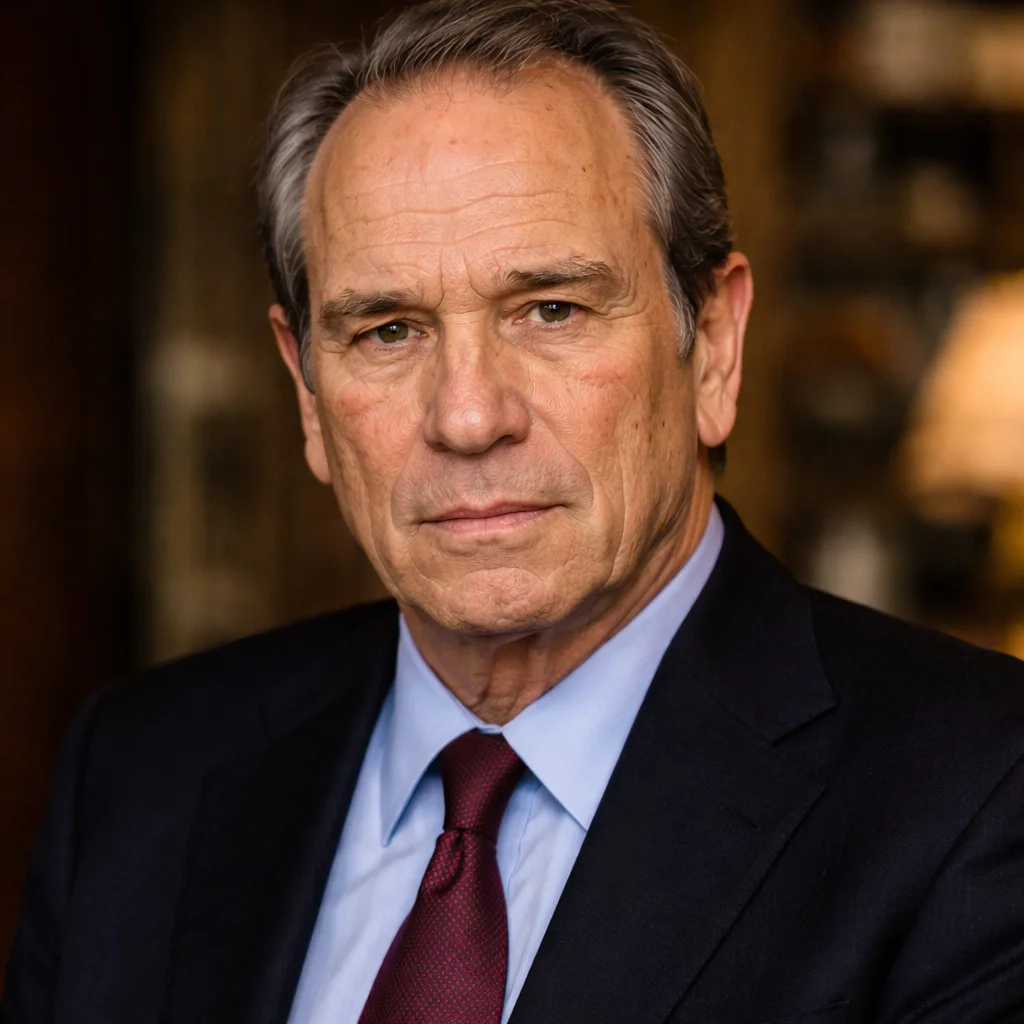
Tommy Lee Jones is known for his signature gruff demeanor, bone-dry wit, and commanding screen presence in films like The Fugitive and Men in Black. Yet behind his famously stern exterior lies a remarkably eclectic renaissance man with an Ivy League pedigree and an extraordinary off-screen life. From rooming with a future Vice President at Harvard to starring in bizarre Japanese coffee commercials, Tommy Lee Jones is far more complex than his Hollywood persona suggests. Here are 15 fascinating facts about the Oscar-winning actor, director, and champion polo player.
1. He Roomed with Future Vice President Al Gore at Harvard
Long before either achieved national fame, Tommy Lee Jones and future Vice President Al Gore were freshman roommates at Harvard University. The two lived together in Dunster House for all four years of college and established a lifelong bond. Jones was a literary scholar and star athlete, while Gore was pursuing political science, yet their shared roommate experience forged a deep trust. Decades later, Jones stepped onto the political stage to deliver an affectionate nominating speech for Gore at the 2000 Democratic National Convention. To this day, Jones considers Gore one of his closest personal friends outside of the entertainment industry.
2. He Played in One of College Football’s Most Legendary Games
During his time at Harvard, Jones was an exceptional student-athlete who played offensive guard for the Crimson football team. In 1968, he was a key offensive starter on the undefeated Harvard team that faced off against an equally undefeated Yale squad. The game ended in a dramatic 29–29 tie after Harvard scored 16 points in the final 42 seconds, prompting the famous student newspaper headline, "Harvard Beats Yale 29-29." Jones was named to the All-Ivy League First Team for his performance that season. His ferocious intensity on the field foreshadowed the gritty toughness he would later bring to his film roles.
3. He Inspired the Lead Character in the Classic Romance "Love Story"
Author Erich Segal was a classics professor at Harvard while Jones was a student there, and he used Jones as inspiration when writing his best-selling novel Love Story. Segal revealed that the upper-crust protagonist, Oliver Barrett IV, was a composite of Jones’s athletic intensity and Al Gore’s aristocratic political background. When the smash-hit movie adaptation was greenlit in 1970, Jones auditioned and secured his very first professional film role. Ironically, instead of playing the lead based on him, he was cast as Hank Simpson, Oliver's boisterous Harvard roommate. The small appearance launched his screen career and opened the door to professional acting.
4. He Graduated Cum Laude with an English Literature Thesis on Flannery O'Connor
Despite his rugged demeanor, Jones is a deeply intellectual artist with a profound passion for classic literature. He graduated cum laude from Harvard University in 1969 with a Bachelor of Arts degree in English Literature. For his senior thesis, Jones wrote an analytical study on the Southern Gothic fiction writer Flannery O'Connor. This deep scholarly understanding of character motivation, dark themes, and narrative structure heavily influenced his later artistic choices as an actor and director. His literary background is particularly evident in his careful selection of complex dramatic roles and Western scripts.
5. He Worked Dangerous Labor on Underwater Oil Rigs to Pay for School
Jones was not born into wealth, and his journey to the Ivy League required immense hardship and grueling physical effort. His father worked in the Texas oil fields, and during college summers, Jones took high-risk jobs working on offshore oil rigs in the Gulf of Mexico. The labor involved dangerous underwater construction and demanding mechanical repairs in extreme environmental conditions. This harsh blue-collar work ethic instilled in him a grounded perspective on life that set him apart from many Hollywood peers. It also helped shape the uncompromising, hardworking authority figures he so convincingly plays on screen.
6. He Spent Five Years Starring on a Daytime Soap Opera
Before becoming an action hero and Oscar contender, Jones paid his dues as a daytime television staple. From 1971 to 1975, he starred as Dr. Mark Toland on the popular ABC soap opera One Life to Live. While daytime television offered reliable income, Jones eventually grew eager to transition into feature films and requested to be written off the show. The writers complied by tragically killing off his character in a memorable hospital storyline. Free from his television contract, Jones immediately moved to Los Angeles to pursue full-time film work.
7. He Improvised His Most Famous Line in "The Fugitive"
In the 1993 thriller The Fugitive, Jones played Deputy U.S. Marshal Samuel Gerard, a role that earned him the Academy Award for Best Supporting Actor. During the iconic storm drain confrontation where Harrison Ford's character yells, "I didn't kill my wife!", the original script called for Gerard to reply, "That may be, but you're going to trial." Jones felt that response was too verbose and unnatural for a laser-focused lawman. He improvised the icy, indifferent line, "I don't care," which perfectly captured the relentless nature of his character. The unscripted moment became one of the most memorable dialogue exchanges in 1990s cinema.
8. He Bluntly Told Jim Carrey "I Cannot Sanction Your Buffoonery"
During the production of the 1995 blockbuster Batman Forever, Jones shared a deep mutual dislike with co-star Jim Carrey. Jones was playing Two-Face while Carrey played The Riddler, but Jones found Carrey's high-octane slapstick humor thoroughly insufferable. Carrey later recalled running into Jones at a restaurant during filming, where Jones turned pale and embraced him with surprising tension. Jones then leaned in and confessed, "I hate you. I really don't like you." When Carrey asked why, Jones bluntly replied, "I cannot sanction your buffoonery," proving that his off-screen stoicism matched his movie characters.
9. He Has Been a Massive Cultural Icon in Japan as "Alien Jones"
Since 2006, Jones has been one of the most recognizable faces in Japanese advertising thanks to a hugely popular campaign for Suntory's Boss Coffee. In these surreal, comedic commercials, Jones plays "Alien Jones," an extraterrestrial researcher who takes various working-class jobs on Earth to observe human behavior. His deadpan commentary on Japanese culture and society resonated so strongly that he has appeared in dozens of television spots over nearly two decades. The ads transformed him into a beloved pop-culture figure in Japan, where fans adore his unblinking alien persona. He routinely visits the country to film new installments for the long-running series.
10. He Is a Championship Polo Player Who Owns Ranches Dedicated to Horses
Far from the Hollywood social scene, Jones spends his personal time competing in high-stakes polo tournaments around North America. He is an accomplished equestrian who actively raises, trains, and plays championship-level polo horses. He owns extensive ranch properties in San Saba, Texas, as well as a specialized polo estate in Wellington, Florida. Jones has frequently joked in interviews that he continues acting in big-budget movies primarily to finance his extraordinarily expensive polo habit. His devotion to the sport reflects a lifelong passion for horses and Western outdoor living.
11. He Is Fluent in Spanish and Personally Manages Black Angus Cattle
When he is not filming, Jones actively works his 3,000-acre cattle ranch in San Saba, Texas, raising prize Black Angus cattle. Unlike many celebrity land owners, he is hands-on with daily operational duties, working alongside his ranch staff. Because many of his workers and regional neighbors are native Spanish speakers, Jones learned the language and is now fully fluent in Spanish. He routinely uses his language skills both on his Texas ranch and while directing projects set in the American Southwest. This fluency added deep authenticity to his work in cross-border films like The Three Burials of Melquiades Estrada.
12. He Won Best Actor at the Cannes Film Festival for Directing Himself
In 2005, Jones made his theatrical feature directorial debut with the acclaimed neo-Western drama The Three Burials of Melquiades Estrada. In addition to directing, he starred as Pete Perkins, a Texas ranch foreman seeking justice for his murdered Mexican friend. The film debuted at the prestigious Cannes Film Festival, where it received widespread critical acclaim for its stark tone and powerful commentary on immigration. Jones won the Cannes Film Festival Award for Best Actor, while screenwriter Guillermo Arriaga took home Best Screenplay. The honor proved that Jones possessed formidable artistic vision behind the camera as well as in front of it.
13. He Formed a Close Creative Bond with Author Cormac McCarthy
Jones shared a deep intellectual friendship with the late literary giant Cormac McCarthy, whose sparse, morally complex Western themes mirrored Jones's own artistic sensibilities. After starring in the Oscar-winning film adaptation of McCarthy's No Country for Old Men, Jones purchased the rights to McCarthy's stage play The Sunset Limited. Jones adapted, directed, and co-starred in the HBO film adaptation alongside Samuel L. Jackson in 2011. McCarthy was notoriously protective of his work, yet he trusted Jones implicitly to bring his solemn prose to life. The two shared a mutual appreciation for the quiet, unforgiving beauty of the American West.
14. A High School Scholarship Transformed His Path from Laborer to Scholar
Jones grew up in a working-class environment in San Saba and Midland, Texas, but his natural intelligence earned him a full scholarship to St. Mark's School of Texas. St. Mark's is an elite prep academy in Dallas that completely transformed his educational trajectory and broadened his artistic horizons. It was at St. Mark's that the future star was first introduced to classic theater, acting in student productions while excelling in academics and athletics. Without that pivotal prep school scholarship, Jones likely would have remained in the Texas oil fields rather than attending Harvard. He frequently cites St. Mark's as the single most influential stepping stone in his young life.
15. He Won an Academy Award for "The Fugitive" and Earned Four Career Nominations
Over a career spanning more than five decades, Tommy Lee Jones has earned critical acclaim as one of cinema's most reliable and commanding dramatic actors. His defining role as Marshal Samuel Gerard in 1993's The Fugitive earned him both the Academy Award and the Golden Globe for Best Supporting Actor. He received three additional Academy Award nominations throughout his career for JFK, In the Valley of Elah, and Lincoln. Despite his vast success, Jones remains famously disinterested in celebrity lifestyle, preferring quiet ranch work over Hollywood glamour. His legacy stands as one of the most authentic and unpretentious talent profiles in modern American cinema.
Sources & References
This AI-assisted post was rigorously curated and fact-checked for accuracy by:
 Martin Roháček
How fun was this article? 🤔
Tap a star to rate it
🧠 Quiz: How closely were you paying attention?
10 questions — all answers are in the article above!
Enjoyed these facts? There's more! 💌
Fresh fun facts in your inbox. No spam, ever.