The Secret Surgery at Sea: 15 Facts About Grover Cleveland
Grover Cleveland's life links a school for blind students, a White House wedding, an operation concealed aboard a yacht and a presidential joke about a gold filling. It also includes serious allegations and decisions about labor, relief and expansion. These stories complicate the familiar portrait of the stubbornly honest president with two separated terms.
1. He taught at an institution for blind students as a teenager
Before practicing law, Cleveland joined his older brother at the New York Institution for the Blind. He began with clerical work and became a secretary and teacher in its literary department. There he befriended Fanny Crosby, later famous for her hymns. The school's own history remembers his service as brief, but credits it with a lasting interest in blind people's welfare.
2. He personally carried out executions as sheriff
Cleveland's early public service included the office of sheriff of Erie County, New York. Its duties extended beyond administration and keeping order: he personally hanged two convicted men rather than delegating the executions. Political opponents later used the label 'the hangman of Buffalo' against him. It is a stark detail behind the more familiar image of a municipal reformer.
3. An 1884 campaign scandal involved more than disputed paternity
Maria Halpin accused Cleveland of assaulting and impregnating her in 1874. The story became a campaign weapon, while his allies attacked her character and suggested his deceased law partner might have fathered the child. The White House Historical Association notes that evidence does not support the alleged relationship with that partner. Cleveland contributed financial support, but the famous campaign rhyme obscures the seriousness of Halpin's allegation.
4. His small White House wedding became a national fascination
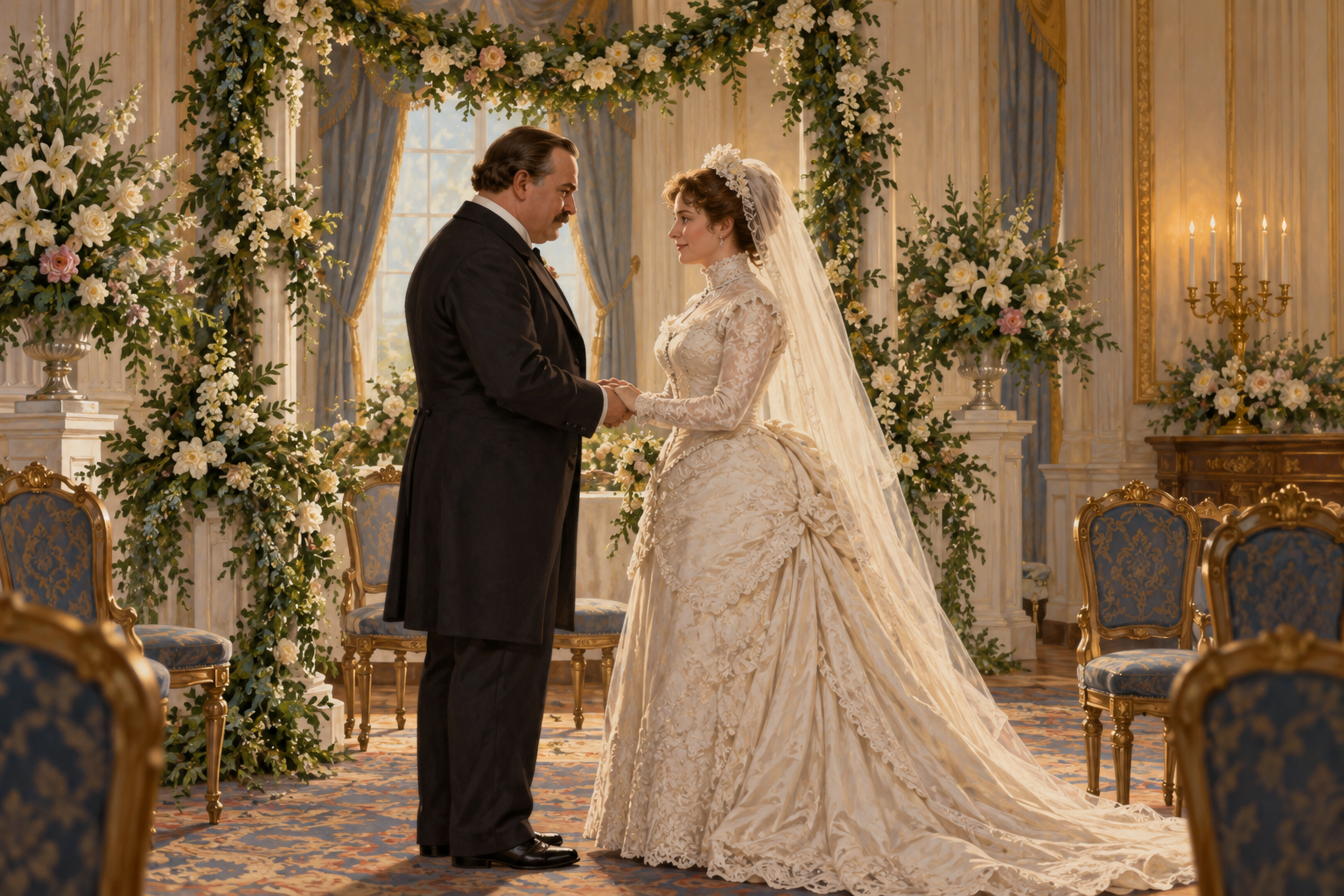
On June 2, 1886, forty-nine-year-old Cleveland married twenty-one-year-old Frances Folsom in the Blue Room. Only twenty-eight guests attended, yet the public followed the event intensely. John Philip Sousa directed the Marine Band, and reporters pursued the couple on their Maryland honeymoon. Cleveland remains the only president to marry inside the White House, although several others married while in office.
5. His daughter's birthplace was the presidential bedroom
Esther Cleveland was born on September 9, 1893, in the family's bedroom in the White House. She remains the only child of a sitting president born in the building. That distinction is narrower than 'first baby born there': the mansion has housed relatives and multiple generations. Her arrival made the working seat of government a family's maternity setting as well.
6. He won the popular vote three times but served two separated terms
Cleveland led the national popular vote in 1884, 1888 and 1892, yet Benjamin Harrison won the Electoral College in 1888. His return in 1893 made him both the twenty-second and twenty-fourth president. For generations his separated terms were unique. Donald Trump's return as the forty-seventh president in 2025 ended that exclusivity, so the old 'only president' fact needs updating.
 You might also like
A White House Library and a Bathtub Hoax: 15 Facts About Millard Fillmore
7. His secret yacht trip concealed major oral surgery
On July 1, 1893, surgeons operated on Cleveland aboard the yacht Oneida, removing a tumor and part of his upper jaw. He feared the impact of alarming health news during an economic crisis. A specially made rubber prosthesis restored his facial contour and speech. When journalist E. J. Edwards exposed the operation, official denials discredited him; surgeon William Keen's published account finally vindicated his reporting in 1917.
8. A loose dental filling inspired his own gold-standard joke
Cleveland's dentist preserved more than evidence of his surgery. In a June 1896 letter, the president reported that a tiny piece of gold had fallen from a tooth. He joked that this showed how completely he had been on the gold standard, adding that he still had the gold and asking what to do with it. The letter survives in the New York Academy of Medicine's collections.
9. He withdrew an annexation treaty and challenged the overthrow of a queen
On returning to office in 1893, Cleveland withdrew a proposed Hawaiian annexation treaty from the Senate and ordered an investigation. He concluded that American representatives had helped overthrow Queen Liliʻuokalani and sought to restore her government. That effort failed. His December message to Congress argued that territorial ambition did not justify ignoring justice and national honor.
 US Presidents
Discover the eccentricities, secret talents, and surprising hidden lives of America's most influential presidents, from frontier wrestlers to covert strategists.
See All Facts
10. He rejected drought relief while proposing another source of seed
In February 1887 Cleveland vetoed a $10,000 appropriation for seed in drought-stricken Texas. He acknowledged real distress but argued that this kind of direct relief exceeded federal constitutional authority. He suggested private charity and asked legislators to redirect their existing shares of government-distributed seed. The episode makes his restrictive view of federal responsibility concrete, rather than leaving it as a campaign slogan.
11. He sent troops to Chicago over the governor's objections
During the 1894 Pullman boycott, Cleveland deployed federal troops despite Illinois governor John Altgeld's insistence that the state could handle the situation. His administration invoked protection of interstate commerce and the mail. The confrontation helped break the strike and brought deadly violence. Cleveland and Altgeld belonged to the same party, showing how sharply labor conflict divided Democrats as well as the country.
12. He risked a confrontation with Britain over a South American boundary
In December 1895 Cleveland urged Congress to investigate the boundary between Venezuela and British Guiana after Britain rejected proposed arbitration. He said the United States should resist British appropriation of territory that its investigation found belonged to Venezuela. The claim stretched American influence under the Monroe Doctrine and produced serious tension before diplomacy moved the dispute toward arbitration.
13. His defense of federal gold reserves depended on private bankers
As Treasury gold reserves dwindled, Cleveland turned to a syndicate associated with J. P. Morgan and the Rothschild interests. His February 1895 message described issuing nearly $62.4 million in bonds to obtain slightly more than $65 million in gold coin, with at least half supplied from abroad. Critics saw dependence on Wall Street; Cleveland presented it as necessary protection of public credit.
14. He dedicated a female symbol of liberty while suffragists protested
Cleveland formally accepted the Statue of Liberty for the United States on October 28, 1886. Women campaigning for the vote challenged the contradiction between celebrating liberty as a woman and denying women political equality. Excluded from the island ceremony, suffragists chartered a boat and protested on the water. The dedication was therefore both a national celebration and a stage for dissent.
15. He wrote a book defending fishermen
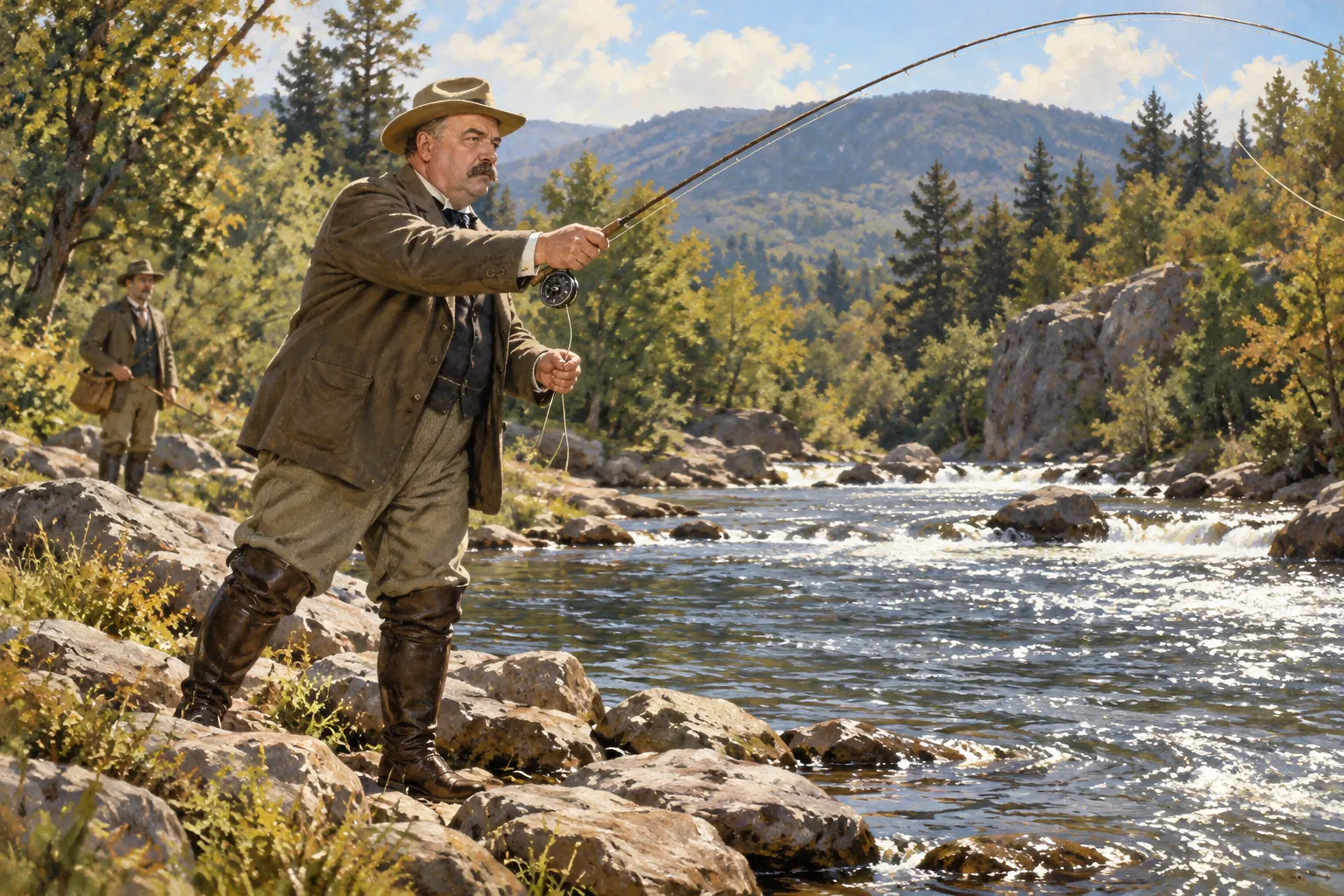
Cleveland's published writing was not confined to political explanations. In 1906 he brought out Fishing and Shooting Sketches, with chapters including 'A Defense of Fishermen' and 'The Serene Duck Hunter.' In the opening essay he complained about newspapers that treated fishing excursions as cover for misconduct. He defended outdoor recreation as restoration from official responsibilities, drawing on his own experience.
How did these facts land?
Know someone who'd love these facts? Share them 👇